
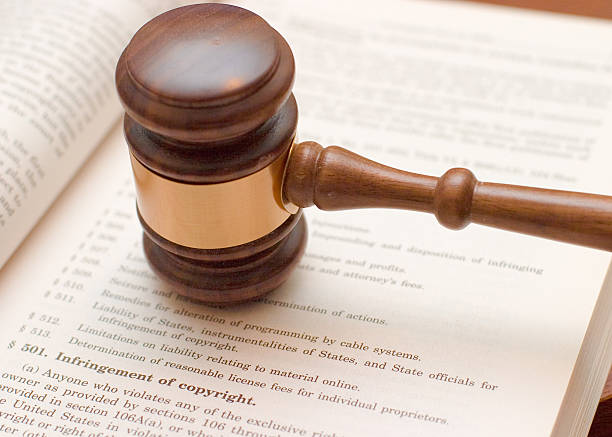
You think you are saving time and money when you grab a photo from Google Images and slap it onto your company’s homepage. That single act can turn into a legal nightmare that costs you tens of thousands of dollars. Every image, illustration, or graphic found online is protected by copyright law the moment it is created. The person who took that photograph or designed that graphic owns exclusive rights to copy, display, and distribute it. When you download it and put it on your website without permission, you are infringing those rights. You are also exposing your business to lawsuits that can be far more expensive than simply paying for a stock photo ever would have been.
Copyright owners have several powerful weapons. They can sue you for actual damages, which means the money they lost because of your unlicensed use, plus any profits you made from that use. In many cases, actual damages are hard to prove, so the law provides an alternative. Copyright holders can instead demand statutory damages, which are fixed amounts set by law. For innocent infringement, that can be as low as $200 per work. But if a court finds that you acted willfully, the statutory damages jump to $150,000 per work. That is not a typo. A single photograph on your site can be treated as one work. If you used ten images without permission, you are looking at a potential liability of over a million dollars, even if your website never generated a single sale. Courts also have the discretion to order you to pay the other side’s attorney fees, which in copyright litigation routinely reach six figures before trial.
The people who come after small businesses are not usually individual photographers. They are stock photo agencies and licensing companies whose entire business model is finding unlicensed uses and sending demand letters. These firms use reverse image search tools to scan thousands of websites daily. They identify your business, screenshot your page, then send you a letter stating that you have used one of their images without a license. That letter often demands a settlement amount ranging from a few hundred to a few thousand dollars. If you ignore it, the next step is a federal lawsuit. Do not assume that these agencies only target big corporations. They actually prefer small businesses because small business owners are less likely to fight back and more likely to settle quickly for what seems like a manageable sum.
Even if you remove the image immediately after receiving the demand letter, that does not make the problem go away. The infringement happened when you displayed the image without authorization. Removing it now only stops the ongoing violation. The copyright owner can still sue for the past use. In fact, some agencies deliberately wait months before contacting you, because they want to document a pattern of ongoing infringement. They might even take screenshots at different times to show that the image remained on your site for an extended period, which they use to argue that your infringement was not innocent but willful. Willfulness does not require you to know that you were breaking the law. It can be shown by reckless disregard for the rights of others. If you grabbed images from a random website without checking the source or reading any terms, you are effectively sticking your head in the sand, and courts can see that as willful.
There are also dangers that go beyond the financial hit. A copyright lawsuit can disrupt your entire business. You will have to spend time responding to discovery requests, sitting for depositions, and reviewing documents. If you use a lawyer, and you absolutely should use a lawyer, the hourly fees will add up quickly. Your attention will be diverted from running your company. The lawsuit becomes public record, which means customers and clients can see that you are being sued for intellectual property theft. That can damage your reputation in ways that are hard to repair. Even if you settle early, the settlement agreement might require you to admit wrongdoing, which you then have to disclose to business partners, investors, or anyone else who asks.
The best defense is to stop using unlicensed images altogether. That does not mean you have to stop using images on your website. You just have to use images that you actually have the right to use. This includes photos you take yourself, images you create in graphic design software, and images that you purchase from legitimate stock photography sites. Be careful with free stock photo sites as well. Some of them offer images under licenses that allow only personal use, not commercial use. Read the license terms for each image. For example, a photo marked for editorial use only cannot be used to promote your products or services. If you are using a photo of a recognizable person, even if you paid for it, you may also need a model release to use that person’s likeness in connection with a commercial purpose. Neglecting that release can lead to a separate legal claim for violation of the right of publicity.
If you already have an existing website, do an audit today. Go through every page and identify the source of each image. If you do not have a clear record of a license or a purchase receipt, assume the worst. Replace or remove that image. A number of free and paid tools can help you scan your site against known image databases. Doing this audit now is far cheaper than waiting for a demand letter to arrive. Keep records of all your licenses, including the exact image file, the date you obtained it, and the terms of use. That paperwork is your proof if anyone ever questions your right to use a particular visual.
Should you ignore a demand letter if you receive one? No. That is the worst thing you can do. It invites a lawsuit by making the copyright owner believe you are either clueless or unwilling to cooperate. But do not panic and pay the demand amount right away either. Instead, contact a lawyer who handles copyright matters. Ask that lawyer to assess whether the image is truly covered by copyright, whether you actually used it in a way that is unauthorized, and whether the demand amount is reasonable. In many cases, you can negotiate a lower settlement, especially if your use was minimal and you removed the image quickly. The goal is to make the problem disappear for the least amount of money and the fewest ripple effects. That is possible, but only if you act calmly and professionally. The bigger lesson is simple: never put anything on your website that you did not create, buy, or receive with a written license. Your website is the face of your business. Do not let that face cost you more than it brings in.