
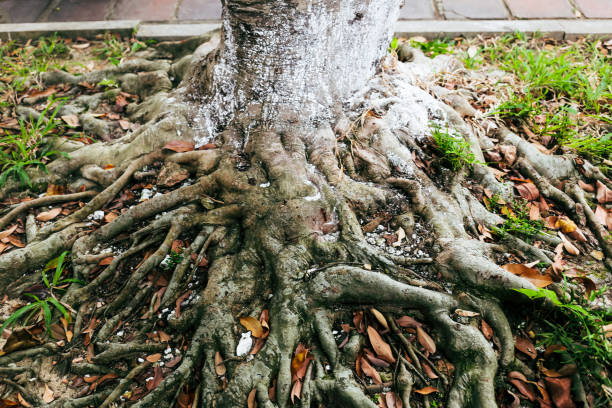
You own a large oak tree in your backyard. It has been there for decades, and you barely think about it. But underground, its roots have been quietly spreading. Over time, they grow under your neighbor’s property, disturb the soil, and start pushing against the concrete foundation of their house. Cracks appear. Water seeps in. The foundation shifts. Now your neighbor is looking at a repair bill that can easily run into the tens of thousands of dollars. And they are looking at you to pay for it.
This scenario is one of the most frequent property damage liability claims that arise outside of vehicle collisions or contractor screw‑ups. It falls under the broad category of negligence‑caused damage to another’s property. The law holds you responsible if your tree (or anything else you own or control) causes damage to a neighbor’s land or structures, provided you knew or should have known about the risk and did nothing reasonable to stop it. In the no‑nonsense world of property liability, ignorance is rarely a defense.
To understand whether you are liable, courts look at a few key facts. First, did you have actual or constructive knowledge that your tree roots were causing or could cause harm? If your neighbor complained two years ago, you know. If you saw the soil heaving next to your fence, you should have known. If you did nothing, you are likely on the hook. Second, could a reasonable person have taken steps to prevent the damage? Installing a root barrier, trimming the roots at the property line, or hiring an arborist to assess the tree are all standard, affordable actions. If you ignored these steps, your negligence is clear.
What about vehicle collisions? That is a different animal, but the same principle applies. If you are driving and slam into your neighbor’s mailbox or garage door, you are responsible. Insurance handles most of those cases. Contractor work is also straightforward: if you hire someone to paint your house and they drop a ladder through your neighbor’s skylight, you can be held vicariously liable for your contractor’s negligence, depending on the facts. But tree root damage sits in a murkier spot because the harm builds slowly below ground, often without obvious signs until it is too late.
The law generally calls this a “nuisance” or “trespass” claim, but the bottom line is money. If the root damage is proven, and you knew about the risk, you pay for the repair. That includes the cost of removing the tree if necessary, fixing the foundation, and sometimes compensating for loss of use of the neighbor’s home while repairs are done. Some states also allow punitive damages if you maliciously ignored warnings.
There is a common myth that if the tree is on your property, whatever happens beyond your property line is not your problem. That is false. Your ownership gives you control and responsibility. The courts have long held that you have a duty to prevent your trees from unreasonably invading your neighbor’s land. If your neighbor’s foundation is damaged because of your tree roots, you cannot just shrug and say “trees grow.” You have to act.
How do you avoid this claim? First, get a professional arborist to inspect any large tree near the property line. Second, install a root barrier along the boundary at the time of planting or when you become aware of a problem. Third, respond immediately if your neighbor raises a concern. A simple conversation and a shared soil test can head off a lawsuit. Fourth, check your homeowner’s insurance policy. Most policies cover liability for tree‑caused damage to a neighbor’s property, but some exclude it if the tree was dead or diseased and you failed to remove it. Read the fine print.
If you find yourself on the receiving end of such a claim, do not ignore the letter or the phone call. Document everything. Take photos of the roots, the cracks, the line between the two properties. Get your own expert opinion. Then talk to a lawyer who handles property damage cases. The other side will likely have an adjuster and a legal team. Do not try to wing it.
In the end, the message is simple: your property is your responsibility, even parts of it you cannot see. A tree root that travels three feet under the soil can cause thirty thousand dollars in damage above it. Ignoring that truth is not a defense; it is the very definition of negligence.