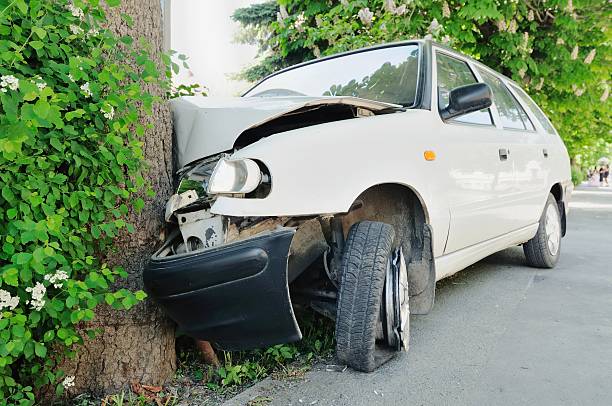

You’re sitting in the back of a rideshare car when the driver runs a red light and T-bones another vehicle. You’re hurt. The driver apologizes, but you quickly learn that the car is not his – it’s a rental, and he only drives for the app on weekends. Who pays your medical bills and lost wages? The answer hinges on one thing: whether the driver had the app turned on at the exact moment of the crash. That single detail determines which insurance policy kicks in, whether you can sue the rideshare company directly, and how long your claim will take to resolve.
Rideshare drivers do not have a single, always-on liability policy. Unlike a taxi company, which typically owns the cars and carries commercial insurance for every trip, rideshare companies like Uber and Lyft rely on a three-tiered insurance system that activates only under specific conditions. Those conditions are tied to the driver’s status in the app. If the app is off, the driver is a private person with personal auto insurance. If the app is on but the driver is waiting for a ride request, a limited liability policy – usually around $50,000 per person and $100,000 per accident – applies. Only when the driver has accepted a ride and you are in the car does the full commercial policy, often $1 million or more, activate.
That middle phase – app on, no passenger – is where most disputes arise. Suppose a driver is heading to a busy pickup area after dropping off a previous rider. The app is still on, but the driver is not transporting anyone. If he crashes into you while you’re walking in a crosswalk, the rideshare company will argue that its limited policy applies. That policy may cover your injuries, but it caps out far below a typical commercial policy. If your damages exceed that cap, you might need to pursue the driver personally. And the rideshare company will likely deny that it is vicariously liable for the driver’s negligence because the driver was not “acting within the scope of employment” – a legal test that turns on whether the driver was performing a service for the company at that moment.
If you are a passenger in the backseat, the situation is clearer. The app has matched you with the driver, the driver is navigating to your destination, and the full commercial policy is in force. The rideshare company’s insurance will cover your injuries, but that does not mean the company itself is legally liable. In many states, the law treats rideshare drivers as independent contractors, not employees. That means you cannot sue Uber or Lyft for negligent hiring or supervision unless you can prove they ignored a driver’s known history of reckless driving. The practical result is that your claim is made against the driver’s insurance, which is actually the rideshare company’s commercial policy, but the company will not accept blame for the driver’s actions.
Taxi accidents follow a different logic. A taxi driver is almost always an employee of the taxi company or an independent driver connected to a dispatch service. The taxi company can be sued directly for the driver’s negligence under a legal doctrine called respondeat superior – Latin for “let the master answer.” If a cab driver hits you, you can name the taxi company as a defendant, and its commercial insurance covers the claim. The same is not true for most rideshare accidents. You cannot simply add Uber or Lyft as a defendant just because the driver had a sticker on the window. You must show that the company exercised enough control over the driver’s actions to create an employment relationship, which is an uphill battle.
What does this mean for you after a crash? First, always document the driver’s app status. Get a screenshot of your ride request and the driver’s name and license plate. Tell the police officer that you were a rideshare passenger. That simple statement forces the officer to note that a commercial policy was in effect. Second, do not assume the driver’s personal insurance will apply. If the driver was off the clock between rides, their personal policy might deny coverage because the car is used for ridesharing, which most personal policies exclude. That leaves you with the rideshare company’s limited policy and little else. Third, consider whether the other vehicle was at fault. If another driver caused the crash, you have a claim against that driver’s insurance, regardless of the rideshare driver’s status. In that case, the rideshare issue becomes secondary.
The real takeaway is that rideshare liability is not a simple story of “the company is responsible.” It is a patchwork of insurance triggers and legal classifications that can leave you with less compensation than you expect. Taxi passengers have it easier because the company is always on the hook. Rideshare passengers have a bureaucratic maze. Knowing which phase of the trip you were in, and having proof of that phase, is the single most important step you can take to protect your claim. Without that proof, you risk a low-ball settlement from a limited policy or a finger-pointing dispute between the driver’s personal insurer and the rideshare company. Do not let that happen. After any rideshare crash, write down everything about the app, the driver, and the route. That information is your leverage.