In an era defined by the relentless creation of digital images and physical artifacts, the question of how to store and organize visual evidence is not merely logistical but profoundly strategic. Whether you are a researcher, an artist, a historian, or simply an individual safeguarding personal memories, a disciplined approach to your visual archive transforms it from a chaotic repository into a powerful, accessible resource. The methodology rests on three interdependent pillars: a consistent naming convention, a logical folder hierarchy, and robust metadata enrichment, all supported by a principle of redundant, secure storage.
The journey begins the moment a piece of visual evidence is created or acquired. Immediately applying a clear, descriptive file naming convention is the foundational act of organization. A name like “IMG_05432.jpg” is a dead end; it reveals nothing. Instead, craft names that include core identifiers such as date, subject, and location—for example, “2024-10-27_Sunset_Acadia_Coastline.jpg.“ This practice ensures that even if a file is separated from its digital folder, its purpose remains partially intact. Consistency in format, such as using YYYY-MM-DD for dates, allows for automatic chronological sorting, bringing immediate order to what could be chaos.
With files thoughtfully named, they must reside within a thoughtfully constructed folder structure. This hierarchy should mirror the way you think about and intend to access your work. A broad, flat list of thousands of files is as paralyzing as a drawer full of unsorted photographs. Instead, create a cascading system. Start with major categories—perhaps “Personal,“ “Professional_Projects,“ or “Research.“ Within these, establish subfolders for years, then for specific events, clients, or themes. For instance, “Research > Civil_War > 2023_Antietam_Visit > Monument_Photographs.“ This logical nesting creates intuitive pathways to any specific item, reducing search time and mental clutter. It is advisable to keep this structure relatively broad and shallow; overly complex, deeply nested folders can become as difficult to navigate as no system at all.
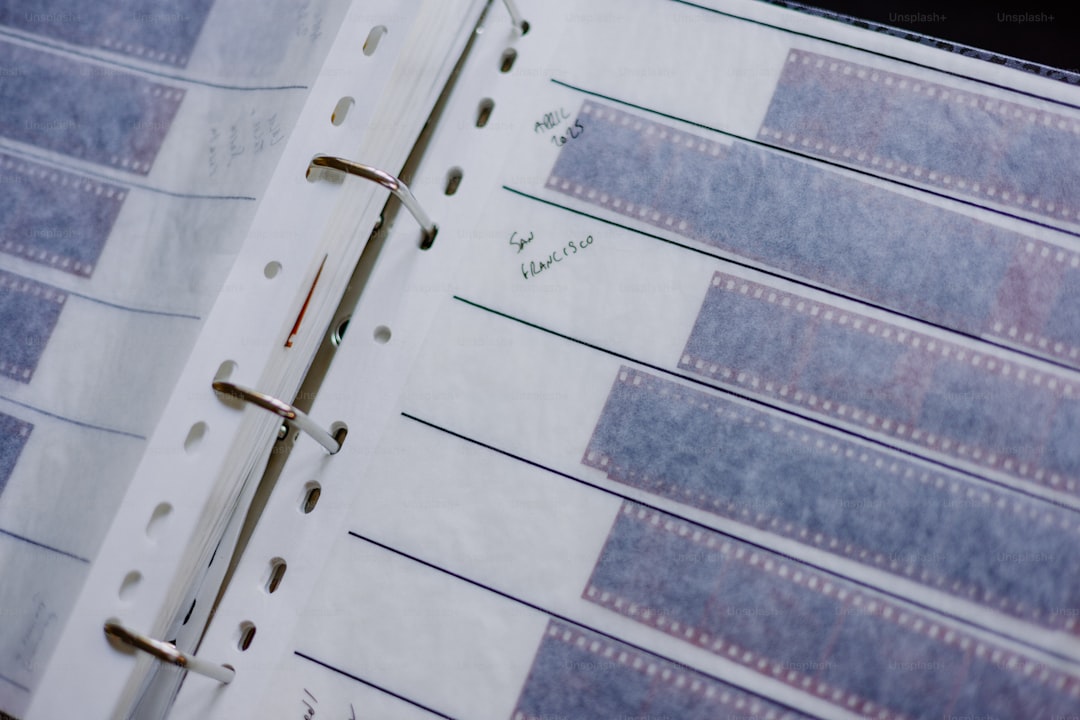
The true power of a modern visual archive, however, lies beyond the file name and folder. It is unlocked through metadata—the embedded information that travels with the digital file. Taking the time to populate fields like keywords, captions, creator, and location within a photo’s properties is an investment in future discovery. This allows you to search across your entire collection for all images tagged with “bridge” or “grandmother” or “Paris,“ regardless of which folder they are in. Many dedicated digital asset management tools, from Adobe Lightroom to more basic system-level software, facilitate this process. For physical evidence, such as printed photographs or objects, this metadata principle translates to detailed labeling on acid-free sleeves or boxes and maintaining a corresponding digital log—a simple spreadsheet linking the physical item’s location to its description.
Finally, no organizational system is complete without a rigorous storage and backup strategy. The rule of three is a wise standard: keep the original files on your primary working device, maintain a synchronized copy on an external hard drive, and secure a third copy offsite, ideally in a cloud storage service. This redundancy guards against the catastrophic loss from hardware failure, theft, or local disaster. For physical artifacts, storage means using archival-quality, acid-free materials and keeping them in a cool, dry, dark environment, away from direct sunlight and fluctuating temperatures that accelerate deterioration.
Ultimately, storing and organizing visual evidence is an act of respect for the past and a gift to your future self. It is a systematic process that demands initial effort but yields perpetual dividends in clarity, efficiency, and preservation. By marrying thoughtful naming, logical structure, descriptive metadata, and secure redundancy, you construct not just an archive, but a living library—a curated collection where every piece of visual evidence, from the most significant document to the simplest snapshot, can be found, understood, and utilized with confidence.