When you are in a car crash, the first question that matters for your claim is who caused it. Many drivers assume that a police report answers that question once and for all. That assumption is wrong. A police report is an important piece of evidence, but it is not a final verdict on fault. Understanding how insurance companies and courts actually use police reports will help you avoid costly mistakes and protect your right to compensation.
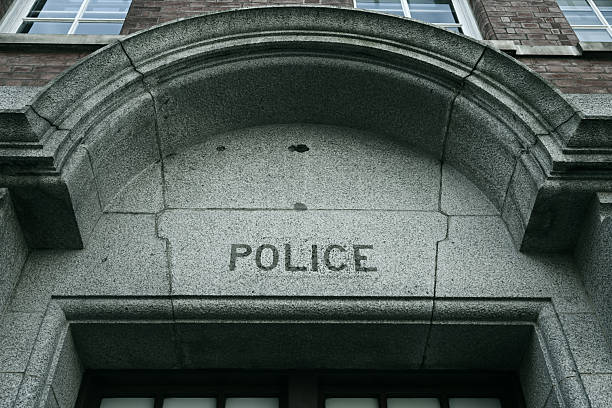
A police officer who arrives at the scene of a crash has a duty to document what happened. That documentation includes the officer’s observations, statements from drivers and witnesses, a diagram of the scene, and often a citation if the officer believes a traffic law was broken. The report will usually contain a box or a section labeled “contributing factors” or “cause of collision.” The officer may check boxes such as “following too close,” “failure to yield,” “distracted driving,” or “driving under the influence.” This is where most people get confused. They see that checked box and think it is the final word on fault.
In reality, police officers are not accident reconstruction experts. They are trained to enforce traffic laws, not to adjudicate civil liability. The purpose of a police report is to provide an official record of the crash for the state’s database and for law enforcement purposes. The fault determination in the report is the officer’s opinion based on what they saw and heard at the scene, often under stressful conditions and with incomplete information. That opinion is admissible in court, but it is not binding. Insurance adjusters, judges, and juries are free to disagree with it.
Insurance companies treat police reports as a starting point, not a conclusion. When you file a claim, the adjuster will read the report and weigh it against other evidence such as photographs, witness statements, traffic camera footage, and data from the vehicles’ event data recorders. If the police report clearly indicates that the other driver violated a law and caused the crash, the adjuster will likely accept that as strong evidence of fault. But if the report is vague, contains errors, or contradicts other evidence, the adjuster may set it aside and rely on other sources.
This is where many people make a critical mistake. They assume that because the police report says the other driver is at fault, their claim will be handled quickly and fairly. They then fail to gather their own evidence. By the time they realize the adjuster is disputing fault, the physical evidence from the scene is gone, witnesses have disappeared, and the driver’s memory has faded. The police report, which should have been a supporting document, becomes the only piece of evidence. If the officer made a mistake, you have no way to correct it.
A common example involves the officer’s conclusion about point of impact. Officers often estimate the point of impact based on skid marks and final resting positions of the vehicles. But skid marks can be misleading. A vehicle may slide after impact for many feet, and the final position might suggest the crash happened at a different location than it actually did. If the officer misplaces the point of impact, the fault determination may be wrong. Without your own photographs or measurements from the scene, you have nothing to challenge that.
Another major issue is that police reports are hearsay when introduced in court. The officer can testify about what they saw and did, but the report itself is not automatically admissible as proof of the facts contained in it. If the case goes to trial, the officer must be present to testify. And if the officer’s testimony conflicts with other credible evidence, the jury can disregard it.
If you are involved in a crash, do not rely on the police report to speak for you. Take your own photographs of the scene from multiple angles, including skid marks, damage to both vehicles, and any road conditions. Get the names and phone numbers of independent witnesses. Request a copy of the police report as soon as it is available and review it for errors. If you see a mistake, you can ask the officer to correct it or you can prepare to challenge it later. Do not assume the report is accurate just because it is official.
In many states, police reports are not even admissible in the insurance claims process unless both parties agree. Some states have laws that prohibit insurance companies from using police reports as the sole basis for denying a claim. That does not mean the report is unimportant. It means you need to treat it as one piece of a larger puzzle.
The bottom line is this: a police report is a useful tool, but it is not a judge’s verdict. It is the opinion of one person at one moment in time. That opinion can be wrong. If you want to protect your legal claim, you must gather your own evidence, understand the limits of a police report, and never let an insurance adjuster or a courtroom use that report against you just because you failed to question it.