When you get into a car accident, the first thing that matters is who caused it. Insurance companies, lawyers, and sometimes judges will all look at the evidence to decide who is legally responsible for the crash. One piece of evidence that has become far more common in recent years is traffic camera footage. These cameras are mounted on traffic lights, intersections, highways, and even private buildings. They can capture the exact moment of a crash, and that footage can be the difference between a claim being approved or denied. If you are trying to determine fault after a crash, understanding how traffic camera footage works and what its limits are is essential.
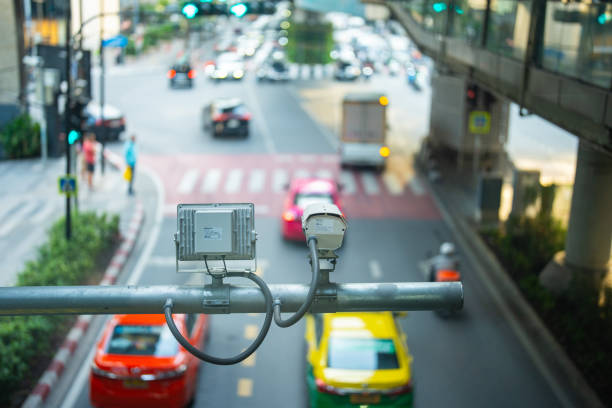
Traffic cameras come in several varieties. Red-light cameras are the most familiar, but there are also speed cameras, traffic monitoring cameras used by transportation departments, and private security cameras pointed at streets or parking lots. Some cities and states also have networks of cameras that record continuously, storing footage for a set period before overwriting it. The key thing to remember is that not all traffic cameras record video. Some only take still photos at the moment a violation occurs, like when a car runs a red light. Others record constant video but only keep it for a short time, often between 30 and 90 days. If you wait too long to look for footage, it may be gone forever.
The value of traffic camera footage in determining fault cannot be overstated. A single clear video can show exactly who had the green light, whether a car ran a stop sign, how fast each vehicle was moving, and whether any driver made an illegal maneuver. This kind of objective evidence is far more reliable than the memories of witnesses or the drivers themselves. People often misremember details, especially after a stressful crash. They might honestly believe they had a green light, only for the camera to show they were wrong. Footage also eliminates the problem of biased testimony, where a driver lies to protect themselves or to shift blame to someone else.
However, you cannot assume that camera footage will always be available or that it will be easy to get. In many cases, the footage is owned by a government agency, like a city traffic department or a state transportation authority. To obtain it, you usually need to file a formal request, often under a public records law. These requests can take days or weeks to process. If the incident happened a month ago, the footage may already be deleted. If the camera is privately owned, such as a security camera on a store or a home, the owner has no legal obligation to hand it over unless you get a subpoena through a lawsuit. Insurance companies sometimes send investigators to ask for footage, but they are not always successful.
Another important point is that camera footage is not always clear. A camera positioned far from the crash scene may show only small blurs of cars. Bad weather, glare from the sun, or poor lighting can make it impossible to see what happened. Some cameras record at low resolution or low frame rates, meaning the video looks choppy and details are lost. Even if the footage is clear, it only shows the angle the camera had. A single camera might miss something that happened just outside its field of view, like a car that swerved into another lane before the crash. In those cases, you may need footage from multiple cameras to get the full picture.
Despite these limitations, traffic camera footage remains one of the strongest tools for proving fault. If you have footage that clearly shows the other driver ran a red light or made an illegal turn, your insurance claim becomes almost automatic. The other driver’s insurance company will have a hard time arguing against clear video evidence. If the footage shows you were at fault, you should be honest about it. Trying to hide or destroy footage is illegal and will make your situation much worse. In some states, tampering with evidence can turn a simple car accident into a criminal matter.
If you are involved in a crash, your first action should be to check if any cameras were nearby. Look at traffic lights, poles, buildings, and gas stations. Ask witnesses if they have security cameras or dashcams. Write down the location of every camera you see, including the street address or intersection. Then contact the owner of the camera as soon as possible, ideally within a few days, to ask whether footage exists and how to request it. Do not wait. Even if you think the accident was clearly your fault, footage might still help you if the other driver was partially responsible.
In the end, traffic camera footage is a neutral witness. It does not lie, it does not forget, and it does not have a personal stake in the outcome. But it only works if you act quickly to preserve it. Knowing how to find, request, and use camera footage gives you a major advantage when determining fault after a crash. It is not magic, and it will not solve every case, but it is often the best piece of evidence you can get.