You own a tree. It falls on your neighbor’s house. Who pays? The answer is not as simple as pointing at the tree and blaming a storm. Property damage from trees, whether falling limbs, uprooted trunks, or overhanging branches that scrape a roof, falls squarely under negligence law. Negligence means someone failed to act with reasonable care and that failure directly caused damage to another person’s property. In the context of trees, the key question is always: Did the tree owner know or should they have known the tree was dangerous?
Courts look at what a reasonable person would do. If you have a large oak with a visible crack running down the trunk, any reasonable person would see that crack and take action. Ignoring it is negligence. If that tree later splits and crushes your neighbor’s fence, you are on the hook for the repair cost. The same logic applies to dead branches hanging over a driveway. A dead branch is an obvious hazard. Leaving it there is a failure to maintain your property, and if it falls on a parked car, you pay.
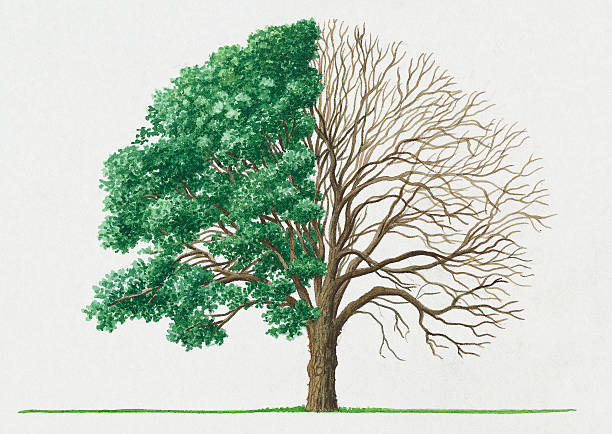
But what if the tree looks healthy? This is where the concept of foreseeability kicks in. You are not expected to be a certified arborist. You are expected to inspect your trees in a way that any ordinary homeowner would. If you walk your yard once a year and see no issues, you have likely met your duty of care. If a healthy tree suddenly uproots during a windstorm and hits your neighbor’s shed, that is usually an act of God. The law does not hold you liable for unforeseeable natural events. The damage is the neighbor’s loss, assuming they have insurance. There is a big difference between a known hazard and an unpredictable one.
The tricky part happens when damage is gradual. Branches that rub against a neighbor’s roof year after year can wear down shingles and cause leaks. A tree with roots that invade a sewer line and crack the pipe is not a sudden event. Here, the negligence claim often hinges on whether the tree owner knew about the ongoing problem. If a neighbor complained repeatedly about the roots or the branches, and you did nothing, you are liable. If you had no notice, the courts may still find you liable if the root growth was so aggressive that anyone with basic awareness would have seen the sidewalk lifting. Ignorance is not always a shield.
Contractors also create tree-related liability. You hire a landscaper to trim branches. The contractor cuts them improperly, making the tree unstable. A year later, the tree falls. Who is at fault? The contractor, because their negligent work created the hazard. But you as the homeowner may also be partly at fault if you hired someone without checking their credentials or if you watched them do shoddy work and said nothing. In legal terms, you can be jointly liable. The damaged neighbor can sue both of you. Always vet your contractors, and never assume that hiring someone transfers all responsibility to them.
What about the classic scenario of a tree that stands exactly on the property line? Both you and your neighbor technically own the tree. Responsibility for maintenance is shared. If the tree falls, both property owners may be partially responsible for the damage. The exact split depends on state laws and whose side of the tree had the defect. A dead limb on your side that falls onto your neighbor’s yard is your problem. A root from your side that damages your neighbor’s foundation is also your problem. Shared ownership does not mean shared blame for a defect that is clearly on one side.
Insurance plays a big role, but do not confuse insurance coverage with legal liability. Your homeowner’s policy may cover damage you cause to a neighbor’s property, but that does not mean you were negligent. Insurers often pay claims without admitting fault. The neighbor’s insurance may also pay and then subrogate, meaning they come after you if they believe you were negligent. The best way to avoid a property damage claim is proactive tree care. Remove dead limbs. Prune branches away from structures. Inspect trees after heavy storms. Document everything with photos and dates. If you know a tree is dangerous, act immediately. The law does not reward procrastination.
Tree damage claims are about timing, knowledge, and common sense. If you see a problem and do nothing, you are negligent. If you could not have seen the problem, you are likely not negligent. Protect yourself by being a reasonable tree owner, and you will rarely face a liability claim that sticks.