
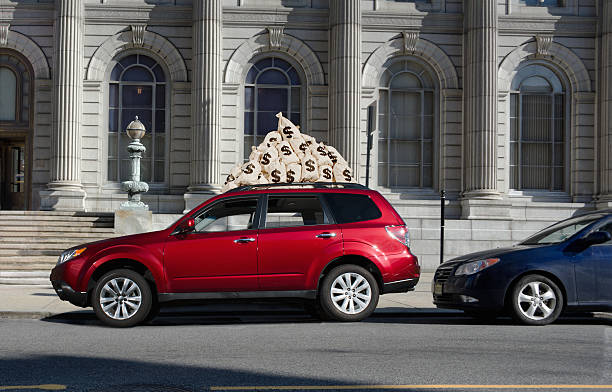
You buy car insurance to protect yourself. But most people do not realize their own policy can protect them when the other driver has no insurance or not enough. That is the job of uninsured motorist coverage and underinsured motorist coverage. These two types of coverage sit quietly in your policy, often ignored, until the moment you need them most. And that moment happens more often than you think.
About one in eight drivers on the road today has no insurance at all. Many more carry only the minimum limits required by law, which in some states is as low as $5,000 per person for bodily injury. If a driver with no insurance hits you, your own policy can pay your medical bills through uninsured motorist coverage. If a driver with too little insurance hits you, underinsured motorist coverage can fill the gap between what the other driver’s policy pays and what your injuries actually cost.
Uninsured motorist coverage, often written as UM, covers you and your passengers when the at-fault driver has no liability insurance. It also covers you if you are hit by a hit-and-run driver. In many states it covers damage to your car as well, but that depends on the specific policy. Underinsured motorist coverage, written as UIM, kicks in when the other driver has insurance but the limits are too low to cover your full damages. For example, if your medical bills total $100,000 and the other driver only carries $25,000 in liability coverage, your UIM can pay the remaining $75,000, up to the limit you purchased.
These coverages are not automatic. You must choose to buy them, and you must decide how much to buy. Some states require insurers to offer UM/UIM, but you can reject it in writing. Many people reject it to save a few dollars per month. That is a mistake. The cost of adding UM and UIM is small compared to the financial wreckage of an accident with an uninsured driver. A typical policy might cost an extra $50 to $100 per year for $100,000 in coverage. One trip to the emergency room can cost ten times that.
There is a common misunderstanding that your health insurance will cover all medical bills from a car accident. It might cover some, but health insurance often has deductibles, copays, and exclusions. It does not cover lost wages, pain and suffering, or long-term rehabilitation. Those are damages you can recover from the at-fault driver’s liability insurance, but if that driver has no insurance, your UM coverage becomes your only source of compensation for those losses.
Another trap is stacking. Some states allow you to stack UM/UIM limits if you have multiple vehicles on the same policy. Stacking means you can combine the limits from each car to get a higher total. For instance, two cars each with $50,000 in UM coverage stacked together gives you $100,000. In non-stacking states, you only get the single limit per accident. You need to know which rule applies in your state and how your policy is written, because stacking can double or triple your available coverage for no extra premium beyond the initial cost.
It is also important to understand that UM/UIM coverage does not apply to every accident. It covers you in a car you own or are driving with permission. It covers you as a pedestrian if you are struck by a car. It covers you as a passenger in someone else’s vehicle. But it does not cover damage to your car if you only bought the bodily injury version of UM/UIM. For property damage, you need a separate endorsement or a collision policy.
When you file a claim under UM or UIM, your own insurance company steps into the shoes of the other driver. That means they have the right to investigate, challenge your injuries, and negotiate a settlement just like they would if they were the other driver’s insurer. This can feel strange because you are dealing with your own company, but they are not on your side in that moment. They owe you a fair settlement, but they will not volunteer more than the law requires. You still need to prove your damages and negotiate.
The best time to think about UM/UIM is before an accident happens. Check your policy declarations page. Look for the numbers next to “Uninsured Motorist Bodily Injury” and “Underinsured Motorist Bodily Injury.” If you see zero or dollar signs that seem low, call your agent. Increase those limits as high as you can afford. Most experts recommend at least $100,000 per person and $300,000 per accident. For a small premium increase, you buy a safety net that can save you from bankruptcy after a crash caused by someone else’s irresponsibility.
Ignoring these coverages is gambling. You are betting that every driver on the road has proper insurance. They do not. You are betting that you will never be hit by someone who fled the scene. It happens every day. Uninsured and underinsured motorist coverage is not a luxury. It is the most important part of your policy after liability insurance itself. Without it, you are only half protected in a car accident.