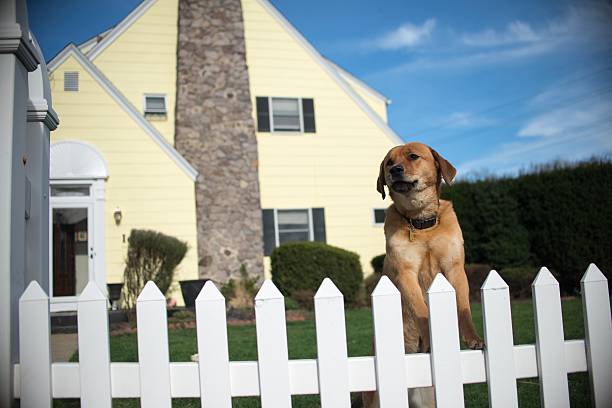
You are walking through your own backyard. Your neighbor’s dog jumps the fence and bites you. Or you are a renter, and your landlord’s dog—kept in a common area—attacks you. These situations are not rare, and they raise a simple question: If you are bitten by a dog on your own property, who pays your medical bills and lost wages? The answer depends on a few hard facts, not on emotions. This essay explains the rules that apply when a dog bite happens on land you own or lease, and it does so in plain English.
First, understand that the legal responsibility for a dog bite generally falls on the dog’s owner. That is true regardless of where the bite occurs. If a dog escapes from its home and bites you in your own garage, the owner is still the one who must answer for the injury. But your status as a property owner, renter, or guest changes the legal arguments the owner might use to avoid paying. The most common defense a dog owner tries is called “assumption of risk.” That is a fancy way of saying you knew the dog was dangerous and you still walked into the situation. If you invite a dog onto your property and it bites you, the owner might claim you assumed the risk. But if the dog came onto your property uninvited, that defense usually fails.
Another key point is the “one-bite rule.” Some states still follow this old rule. It says a dog owner is not liable for a first bite if the dog had never shown aggression before. But that rule has exceptions. If you own the property and the dog enters without permission, most courts will say the owner is strictly liable—meaning they pay even if the dog was sweet its whole life. Why? Because the owner failed to control the dog. Your property is your private space. The law gives you a strong expectation that you are safe there. When a dog violates that space and hurts you, the owner’s duty to control the animal is broken, and the one-bite rule often does not protect them.
What if the dog belongs to someone who lives with you? Say your roommate owns a dog, and it bites you in your shared apartment. This gets complicated. In many states, the roommate is still liable because they own the dog. But if you knew the dog was aggressive and you chose to live with it, the owner could argue you assumed the risk. Landlord-tenant situations also cause confusion. If you rent a house and the landlord’s dog, kept in the backyard, bites you while you are on the porch, the landlord may be responsible. However, if the dog lives in a separate unit and you enter that unit without permission, you might be the one at fault. The key is whether you had a right to be where you were when the bite happened. On your own property, you always have that right.
You might wonder about trespassing dogs. If a stray dog wanders into your yard and bites you, you cannot sue a specific owner because there is none. But if the dog is known to run loose, you might have a claim against the owner for letting it roam. You would need to prove the owner knew the dog was out. That takes evidence: witnesses, prior complaints, or animal control records. In these cases, your property line does not shield the owner if they were negligent in controlling the dog.
Now, what about your own dog? If your dog bites you, you generally cannot sue yourself. Your homeowners insurance might cover your medical bills if you have a medical payments clause, but you cannot collect liability damages from your own policy for your own injury. However, if your dog bites a guest on your property, that is a different story. Your liability insurance would apply. But for self-injury, you are stuck with your own health insurance.
One more important rule: the “attractive nuisance” doctrine sometimes comes up. This is a legal idea that says if you have something on your property that attracts children—like a swimming pool or a dangerous dog—and a child gets hurt, you may be liable. But that doctrine usually applies to property owners who keep a dangerous condition. If your neighbor’s dog jumps into your yard and bites a child who is lawfully there, the neighbor is the one with the dangerous animal. You, as the property owner, are not automatically liable unless you knew the dog was there and did nothing.
So what should you do immediately after a dog bite on your own property? First, get medical help. Second, take photos of the wound, the dog, and the location. Third, report the bite to animal control. Fourth, get the dog owner’s contact information if you can. Fifth, do not talk to the owner’s insurance company until you have a clear understanding of the facts. Write down everything you remember. Your property rights give you a strong position, but you still need to prove the dog belonged to someone and that you were where you had a legal right to be.
In the end, being bitten on your own property is a violation of your personal space and safety. The law generally sides with you because you had no obligation to expect a dangerous animal in your own yard. The dog’s owner bears the burden of control and the cost of any injury. Do not let them shift the blame to you. Stay calm, gather evidence, and consult a lawyer who handles dog bite cases. You do not need to be a lawyer to understand your rights—you just need to know the few hard facts that matter.