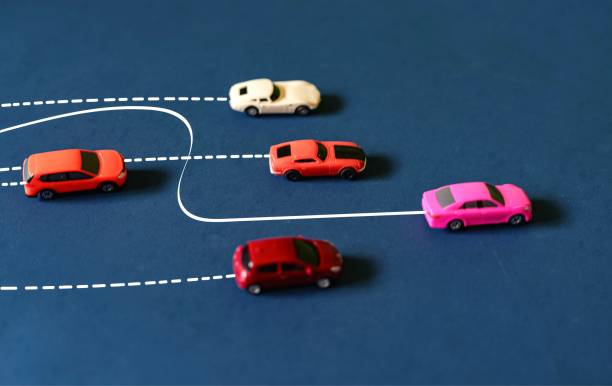
When more than two cars are involved in a crash, figuring out who is at fault gets complicated fast. It is no longer a simple he-said-she-said between two drivers. A pileup on the highway, a chain-reaction rear-end at a stoplight, or a sideswipe that triggers a three-car spinout all require a careful reconstruction of events. Fault determines who pays for damage, medical bills, lost wages, and pain and suffering. In a multi-vehicle accident, liability might fall on one driver, be split among several, or even land partially on a driver who was never hit. The rules are straightforward, but the evidence must be solid.
The starting point is the basic duty every driver owes to others on the road. You must obey traffic laws, drive at a safe speed, maintain a proper lookout, and leave enough space to stop or react. When you breach that duty and your breach causes an accident, you are at fault. In a multi-car crash, the question becomes which driver’s breach started the chain of events and whether other drivers had a reasonable chance to avoid the collision.
Police reports are often the first piece of evidence people look at, but they are not the final word. An officer who arrives after the fact can only record what they see, what drivers tell them, and what witnesses say. They may issue a citation for a specific violation, like following too closely or failing to yield. That citation is strong evidence, but it can be challenged later if other facts come to light. Insurance adjusters and lawyers will dig deeper.
Physical evidence tells the most reliable story. Skid marks show where braking occurred and how hard. The length and pattern of skid marks can indicate speed and whether a driver was paying attention. Damage patterns on the vehicles reveal the angle and force of impact. If Car A has rear-end damage and Car B has front-end damage, and Car C has rear-end damage from Car B, the sequence is clear. But if cars are scattered and impacts overlap, an accident reconstruction expert may be needed to map the positions and speeds.
Witness statements are helpful but must be treated with caution. People often misremember details, especially in a high-stress event. A witness who says a light was green may be contradicted by another witness or by traffic camera footage. That is why video evidence has become the gold standard in multi-vehicle crashes. Dashcams, traffic cameras, and nearby security cameras can show exactly what happened second by second. If you have a dashcam, it can save you from being unfairly blamed. If you don’t, try to identify nearby businesses or homes that might have recorded the accident.
Another critical source is the event data recorder, often called a black box, in modern cars. It logs speed, brake application, steering angle, and seatbelt use in the seconds before a crash. With a court order or your permission, that data can be downloaded and used to prove or disprove fault. If a driver claims they were going 30 miles per hour but the black box shows 60, the claim collapses.
Once all evidence is collected, the legal standard for fault in a civil claim is a preponderance of the evidence. That means the person claiming fault must show it is more likely than not that the other driver was negligent. It is not beyond a reasonable doubt as in criminal court. It is a fifty-plus-percent threshold.
In many states, fault can be shared. This is called comparative negligence. If Driver A ran a red light but Driver B was speeding, both may be partially at fault. The percentage each driver carries determines how much they can recover. In a pure comparative negligence state, a driver who is ninety percent at fault can still collect ten percent of their damages from the other party. In a modified comparative negligence state, if your fault is fifty percent or more, you collect nothing. A few states still use contributory negligence, where any fault at all bars recovery. That is rare and harsh, but it exists in places like Virginia and Maryland.
In a multi-vehicle scenario, fault percentages can get messy. For example, a three-car rear-end at a stoplight. Car A stops. Car B stops behind Car A. Car C fails to stop and hits Car B, pushing Car B into Car A. In that classic case, Car C is typically one hundred percent at fault for both Car A and Car B. Car B is not at fault because they were stopped. But if Car B had stopped too close to Car A, or if Car A slammed on brakes for no reason, percentages could shift. Each driver’s actions are judged independently.
Insurance companies will negotiate based on their assessment of fault. They want to pay as little as possible. If you are in a multi-vehicle crash, do not admit fault at the scene. Do not say “I’m sorry” or “I didn’t see you.“ Those words can be used against you. Exchange information, take photos, and call the police. Get the names and phone numbers of any witnesses. If you are injured, see a doctor immediately. Delayed medical treatment can be used to argue that your injuries were not serious or were caused by something else.
If the insurance company assigns you a share of fault you disagree with, you have the right to challenge it. You can hire a lawyer, present your evidence, and if necessary, file a lawsuit. A judge or jury will then decide fault based on the evidence. That process is slow and expensive, so most multi-vehicle claims settle without a trial. But the threat of a lawsuit often forces the insurance company to be reasonable.
Understanding how fault is determined in a multi-vehicle accident puts you in a stronger position. You know what evidence matters, what to do at the scene, and how to push back if you are blamed unfairly. Fault is never automatic in a pileup. It is built on facts, not assumptions.