If you have ever watched a courtroom drama, you know the phrase “beyond a reasonable doubt.” That is the standard the prosecution must meet to convict someone of a crime. But when you file a liability claim – whether it is for a car accident, a slip and fall, or a defective product – the rules are completely different. You do not need to prove your case beyond a reasonable doubt. You only need to show that it is more likely than not that the other person is responsible. That is called the “preponderance of evidence” standard, and it is the single most important reason why a liability claim is not a criminal case.
Understanding this difference is critical because it affects everything from how you gather evidence to how a judge or jury decides your case. In a criminal trial, the government must prove guilt to a near-certainty. The standard is high on purpose: we would rather let a guilty person go free than send an innocent person to prison. But a liability claim is about money, not freedom. The stakes are lower, so the burden of proof is lower too.
Preponderance of evidence means you only have to tip the scales slightly in your favor. Imagine a set of old-fashioned balancing scales. You put your evidence on one side and the other party’s evidence on the other. If your side is even a tiny bit heavier – say 51 percent to 49 percent – you win. You do not need to prove that you are 100 percent right. You just need to convince a jury or judge that it is more probable than not that the other person’s negligence caused your injury. That is a much easier bar to clear than beyond a reasonable doubt.
For example, suppose you are rear-ended at a stoplight. The other driver says you slammed on your brakes for no reason. You say you stopped because a pedestrian crossed. There are no witnesses. Under a criminal standard, a prosecutor might not bring charges because there is reasonable doubt about who was at fault. But in a liability claim, you only need to show that it is more likely than not that the other driver was following too closely or not paying attention. Maybe your car has damage consistent with a rear-end collision, or the police report notes that the other driver admitted they were distracted. Even if the evidence is not airtight, it can be enough to tip the scales.
This lower standard exists because liability claims are about compensating victims, not punishing wrongdoers. The law wants to make sure that people who are hurt by someone else’s carelessness get paid for their medical bills, lost wages, and pain and suffering. If we required proof beyond a reasonable doubt in every civil case, many legitimate claims would fail. Victims would be left with nothing, and negligent parties would never have to pay for the harm they caused.
Another way to think about it is the difference between “probably” and “certainly.” In a criminal case, the jury must be almost certain – certainly or very close to it. In a liability claim, the jury only needs to decide that it is probable. That is why you often hear people say that a defendant was found “not liable” in a civil case, not “innocent.” Being not liable simply means the plaintiff did not meet the preponderance burden. It does not mean the defendant did not do it; it just means the evidence was too close to call.
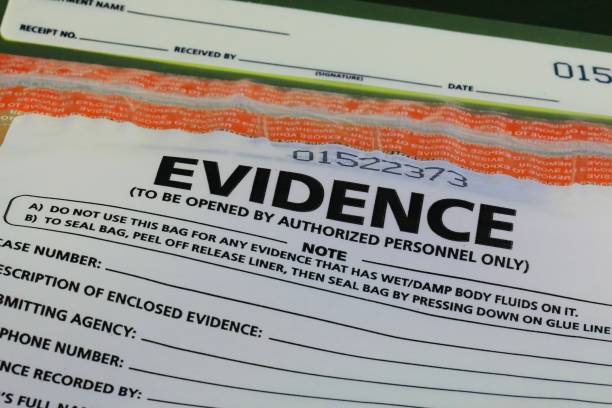
This distinction also affects how lawyers prepare for trial. In a criminal case, the defense will attack every tiny gap in the prosecution’s story to create reasonable doubt. In a liability case, the defense still tries to create doubt, but they know that even a small amount of doubt may not be enough to win. The plaintiff’s job is to assemble enough evidence – photos, medical records, expert testimony, witness statements – to make their story the more likely one. The defense’s job is to present an alternative story that is just as likely, or more likely, than the plaintiff’s.
For someone considering a liability claim, this lower standard is good news. You do not need to have a smoking gun. You do not need a confession. You just need enough credible evidence to tip that scale. That is why many cases settle out of court: both sides know that the preponderance standard makes it risky for the defendant to go to trial when the evidence is not overwhelmingly in their favor.
Remember, a liability claim is not about sending someone to jail. It is about holding them financially responsible for the harm they caused. The preponderance of evidence standard reflects that reality. It levels the playing field and ensures that accident victims have a fair shot at recovery without having to meet an impossibly high burden. So if you are worried about whether you have enough proof, keep this in mind: you do not need certainty. You only need probability.