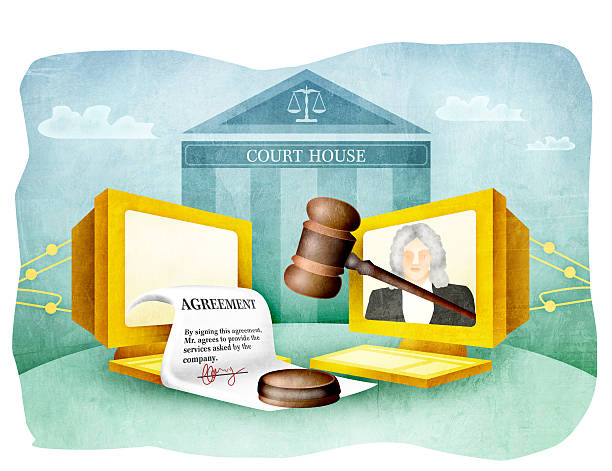

Professional liability claims, often called malpractice claims, arise when a licensed professional fails to perform their duties to the accepted standard of care in their industry. While doctors and lawyers are the most famous targets, engineers, architects, accountants, and consultants face these claims routinely. The core idea is simple: you hire a professional because they have specialized knowledge you lack. You trust them to apply that knowledge correctly. When they make a mistake that causes you financial harm, you have a claim.
Consider a structural engineer who designs a commercial building. He performs the load calculations for the steel framework. He makes a simple arithmetic error in his spreadsheet. He adds two numbers incorrectly, and the error propagates through his equations. The steel beams he specifies are two inches narrower than what the building actually requires. The general contractor builds exactly what the engineer specified. Eighteen months after occupancy, the building begins to shift. Cracks appear in the walls. Windows start sticking. Eventually, an independent inspection reveals the flaw. The building is unsafe and must be evacuated. The cost to retrofit the structure is three million dollars. The building owner loses four months of rental income. Tenants sue the owner for breach of lease.
The building owner now has a professional liability claim against the engineer. The owner paid for competent professional services and received defective ones. The question in this claim is not whether the engineer made a mistake. He clearly did. The question is whether that mistake fell below the accepted standard of care. Professionals are not guarantors of perfect results. They are not required to be infallible. The law recognizes that complex work involves judgment calls and occasional error. What the law requires is that the professional act with the same degree of skill, knowledge, and care that a reasonably competent professional in the same field would exercise under similar circumstances.
This standard is critical to understand because many people assume that any error equals liability. It does not. If the engineer used a standard calculation method taught in every accredited engineering program, but the building foundation settled unexpectedly due to undiscovered soil conditions, he likely has no liability. He followed the standard approach. The error was not a failure of professional judgment but an unforeseeable site condition. However, if he used a novel calculation method without peer review or failed to check obvious inconsistencies in his results, he likely violated the standard of care. The difference often comes down to process, not outcome.
Professional liability claims are almost always decided by expert testimony. The plaintiff must hire a qualified expert from the same profession who will testify that the defendant deviated from accepted practice. The defendant will hire their own expert to argue the opposite. These experts review the same project files, the same emails, the same drawings, and the same calculations. They then offer opposing opinions about what the standard of care required. A jury, which includes no engineers or architects, must decide which expert is more believable. This is why documentation matters so much in professional liability. A professional who keeps detailed notes explaining why they made certain decisions stands a much better chance of defending a claim than one who works casually and leaves no paper trail.
Another feature of professional liability claims is the role of professional standards and codes. Most licensed professions have established codes of ethics and practice standards. Many states adopt these codes into law or regulation. When a professional violates a specific code provision, that violation is strong evidence of negligence. For example, if an architectural licensing board requires architects to perform site visits at specific construction milestones, and an architect skips those visits, that is a clear deviation from the standard. The building owner does not need to prove that the architect made a poor design decision. The owner only needs to prove the architect failed to perform required duties.
Damages in professional liability claims are economic by nature. You cannot sue an engineer for pain and suffering caused by a faulty roof design. You can sue for the cost of replacing the roof, the lost business during construction, and the fees you paid to the engineer for the defective design in the first place. Punitive damages are rare unless the professional acted with fraud or reckless indifference to safety. Most claims settle out of court because both sides understand the high cost of litigation and the uncertainty of jury verdicts. Insurance coverage is almost always involved because professionals carry malpractice insurance as a condition of licensing or employment.
The practical takeaway for anyone considering a professional liability claim is straightforward. You must identify the specific professional who made the error. You must determine what standard applied and how that professional failed to meet it. You must prove that the error caused your financial loss, not just general disappointment. And you must move quickly because statutes of limitations for professional malpractice are often short, sometimes only one or two years from the date you discovered or should have discovered the error. A good claim backed by strong expert testimony and clear documentation will almost always get serious attention from the professional and their insurer. A weak claim based on hunches and frustration will likely go nowhere and waste everyone’s time.