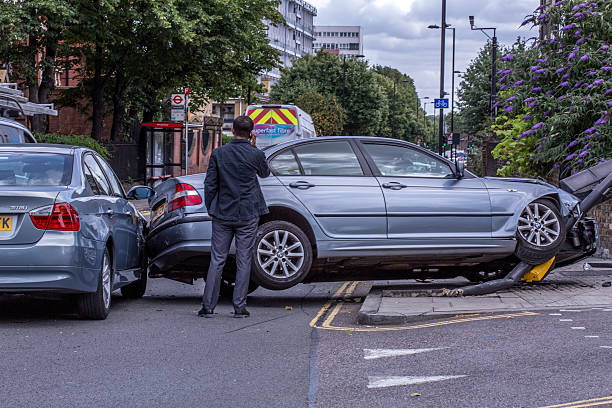
Following a car accident, the responding officer’s police report often feels like the definitive document. It contains a narrative, witness statements, and, crucially, a section where the officer may assign or imply “fault.“ Many individuals believe this finding is the final word on who is financially responsible for damages in a liability claim. However, while a police report is a significant piece of evidence, its determination of fault is not legally binding in settling your civil insurance claim or lawsuit. Understanding its influential yet non-conclusive role is key to navigating the post-accident process effectively.
A police report serves as an official, contemporaneous record of the incident. It provides an objective third-party perspective from a trained observer, often including diagrams, citations issued for traffic violations, and statements from those involved and any witnesses. For insurance adjusters, who must reconstruct events that occurred before their involvement, this report is an invaluable starting point. An officer’s conclusion that one party violated a specific traffic law, supported by physical evidence and witness accounts, carries substantial weight. It can strongly influence an insurance company’s initial assessment of liability, potentially leading to a faster settlement if the fault seems clear and uncontested.
Despite this influence, several critical reasons prevent a police report’s “fault” finding from being the ultimate decider. First and foremost, the officer was not present during the accident. Their conclusion is an opinion based on an investigation conducted after the fact. This opinion, while expert, is still subject to human error, incomplete information, or the conflicting accounts common in the chaotic aftermath of a collision. Second, the purposes of a police report and a civil liability claim are fundamentally different. The officer’s role is to enforce traffic laws and may issue citations based on a “probable cause” standard. A liability claim, however, operates under a “preponderance of the evidence” standard—meaning it is more likely than not that one party’s negligence caused the accident. These are distinct legal thresholds.
Furthermore, the insurance claims process is a civil matter between private parties (or their insurers). The police officer, representing the state, does not have the authority to adjudicate civil liability or compel an insurance company to pay damages. That determination is made through negotiation between insurance adjusters, and if necessary, by a judge or jury in a court of law. In a civil trial, the police report is typically admitted as hearsay evidence, though often under exceptions for public records. Even then, the officer’s opinion on the ultimate issue of fault may be challenged, and the opposing party can present their own evidence, expert testimony, and alternative interpretations of the facts to rebut the report’s conclusions.
Practically, this means you should treat the police report as a powerful piece of evidence, but not the final verdict. If the report assigns fault to the other driver, it can be a strong tool in your negotiations with their insurance company. Conversely, if the report places fault on you, all is not lost. You or your insurer can gather additional evidence—such as independent witness statements, detailed photographs of the scene and vehicle damage, traffic camera footage, or testimony from accident reconstruction experts—to challenge the report’s findings. The narrative of how the accident occurred is built from the totality of the evidence, not a single document.
In conclusion, while a police report’s finding of fault is a highly influential factor that can shape the direction of a liability claim, it does not unilaterally decide the outcome. It is a persuasive opinion entered into the broader body of evidence. The final determination of civil liability rests with insurance adjusters during settlement negotiations or, in disputed cases, with the civil court system. Therefore, while obtaining and carefully reviewing the police report is an essential step, a comprehensive approach that considers all available evidence is crucial to effectively resolving your liability claim.