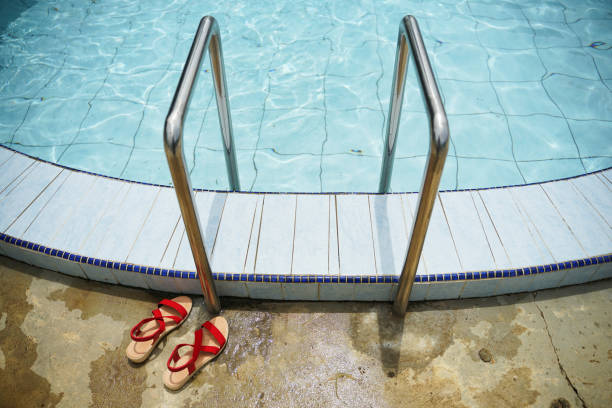
The serene image of a backyard swimming pool belies a significant potential for serious accidents and, consequently, complex legal liability. When injuries or fatalities occur in or around a pool, determining responsibility is a critical process that often hinges on the legal concept of premises liability. This doctrine holds property owners accountable for maintaining a reasonably safe environment for guests and, in some cases, trespassers. An analysis of common pool accident lawsuits reveals a consistent pattern of causes, primarily stemming from failures in supervision, maintenance, security, and proper warning.
Perhaps the most prevalent cause of liability in pool accidents is inadequate supervision, particularly in the context of residential gatherings or public facilities. For private homeowners, hosting a pool party carries a substantial duty of care. This duty escalates when children are present, as they are considered invitees who cannot fully appreciate the dangers of deep water or slick surfaces. Liability can attach if the host fails to provide competent adult supervision, becomes distracted, or serves alcohol to guests to the point of impairment, thereby contributing to risky behavior. In commercial settings, such as community pools or hotels, the absence of certified, attentive lifeguards is often a central factor in negligence claims. Courts frequently examine whether the supervision provided was commensurate with the foreseeable risks, with child-heavy pools demanding the highest level of vigilant oversight.
Closely related is the failure to secure the pool area, a leading factor in tragic drownings involving young children. This falls under the legal principle of “attractive nuisance,“ which stipulates that owners must take reasonable steps to protect children from dangers on their property that might lure them in. A simple, unlocked gate or a flimsy fence that a child can circumvent can form the basis for devastating liability. Jurisdictions often have specific codes mandating pool barriers of a certain height, with self-closing and self-latching gates positioned out of a child’s reach. Non-compliance with these codes is typically considered strong evidence of negligence. Furthermore, the lack of proper safety equipment, such as life rings or shepherd’s hooks readily available at a commercial pool, can also be cited as a failure to provide a safe environment.
Negligent maintenance leading to hazardous conditions constitutes another major category of liability. Swimming pools are complex systems requiring diligent upkeep, and lapses can create hidden perils. Slippery decks or pool surrounds without adequate textured, non-slip surfaces are a frequent cause of slip-and-fall injuries, which can result in head trauma or fractures. Poor water clarity due to improper chemical balance or filtration not only poses health risks but also obscures a swimmer in distress from view, delaying rescue. Underwater hazards, like broken drain covers that can cause powerful suction entrapment, or sharp edges on ladders and tiles, further illustrate how deficient maintenance directly leads to accidents. In many cases, proving liability involves demonstrating that the owner knew or should have known about the dangerous condition and failed to rectify it within a reasonable time.
Finally, the failure to warn of non-obvious dangers can establish liability. While the risks of deep water may be considered open and obvious to an adult, other hazards may not be. This includes failing to clearly mark sudden drop-offs from shallow to deep ends, not posting “No Diving” signs in clearly visible areas where the water is too shallow for safe diving, or neglecting to warn guests about recently applied chemicals that make surfaces extra slick. For commercial pools, the absence of posted rules regarding running, roughhousing, or glass containers can be used to show a lack of reasonable care in managing patron behavior.
Ultimately, liability in pool accidents is rarely the result of a single, isolated mistake. It typically arises from a confluence of oversights—a wobbly gate latch, a distracted host, a slick deck—that create a perfect storm for tragedy. The legal system places a significant burden on pool owners, both residential and commercial, to proactively anticipate and mitigate these well-known risks. By understanding these common causes—lapses in supervision, security, maintenance, and communication—owners can better fulfill their duty of care, transforming a potential hazard into a safer venue for enjoyment and relaxation.