
Go to any shopping center, apartment complex, or hotel and you assume a basic level of safety. But when a person is robbed, assaulted, or shot on commercial property, the question becomes who pays for that damage. This is where premises liability law meets the concept of inadequate security. Property owners and managers have a legal duty to protect people who lawfully enter their land from foreseeable criminal acts. When they fail that duty, they can be sued for every dollar of harm that results.
Inadequate security claims are a specific branch of premises liability. The core idea is simple: a property owner must take reasonable steps to prevent foreseeable harm. That harm does not have to be a loose stair railing or a wet floor. It can be an attack by a third party. Courts have long recognized that owners of commercial properties, apartment buildings, parking lots, and hotels can be held responsible if a customer, tenant, or visitor is injured by a criminal because the owner’s security measures were not up to par.
To win this kind of claim, the injured person must prove four things. First, that the property owner owed them a duty of care. That duty exists for anyone who is on the property legally—customers, invitees, tenants, and guests. Second, the owner must have breached that duty. A breach happens when the property owner fails to take reasonable security measures given the circumstances. Third, that breach must be the direct cause of the harm. Fourth, there must be actual damages, meaning physical injuries, medical bills, lost wages, and pain and suffering.
The big question in almost every inadequate security case is what counts as “reasonable” security. The law does not require a business to turn its parking lot into a fortress. It does not demand armed guards at every door or a full-time surveillance team. But it does require the owner to look at the specific risks at that location and act accordingly. If a convenience store has had three armed robberies in the past year, installing a single deadbolt on a back door that employees prop open is not reasonable. If a hotel is in a high-crime neighborhood and its parking lot has no lights, that is likely a breach of duty.
The key factor is foreseeability. A property owner can only be held liable for criminal attacks that were reasonably foreseeable. This does not mean the owner must predict the exact crime at the exact time. Foreseeability is judged by whether the owner knew or should have known that criminal activity was likely to occur on the premises. Courts look at prior crimes on the property or in the immediate area. If a shopping mall has had a string of carjackings in its lot, the owner is on notice that future carjackings are foreseeable. The same logic applies to an apartment complex where residents have reported drug dealing and assaults.
But if a random attack happens in a low-crime suburban office park that has never had an incident, the owner generally will not be liable. No one can predict a random act of violence. The law only expects property owners to guard against what they could have seen coming.
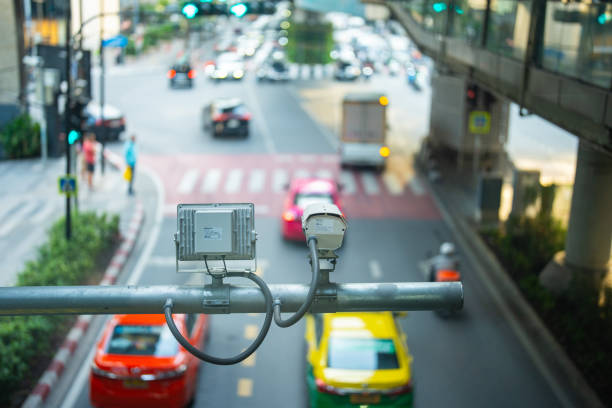
What specific security measures are considered reasonable? It depends entirely on the situation. In a high-risk setting, reasonable steps might include adequate lighting in parking lots and walkways, security cameras that actually work and are monitored, locks that function on all doors and windows, security guards or patrols, fences or gates to control access, and emergency call boxes. In a lower-risk area, simply having working locks and basic lighting might be enough. The standard is not perfection. It is what a reasonably careful property owner would have done under the same circumstances.
Another important point is that property owners cannot claim complete ignorance. They have a duty to know what is happening on their land. This means they must keep records of incidents, review police reports about nearby crime, and respond to complaints from tenants or customers. If a tenant repeatedly reports a broken gate lock and the landlord does nothing, the landlord is on notice. A court will treat that as knowledge.
One common myth is that a property owner is always safe if they post a sign saying “Beware of Crime” or “Park at Your Own Risk.” Those signs have almost no legal power. A warning does not erase the duty to take reasonable precautions. In fact, a sign can sometimes be used against the owner as proof that they knew the area was dangerous and did nothing to fix it.
Inadequate security claims often result in large settlements or verdicts because the injuries involved are severe—broken bones from a beating, gunshot wounds, psychological trauma, or death. The damages add up fast. A victim can recover medical expenses, lost income, physical pain, emotional distress, and in some cases punitive damages if the owner’s conduct was especially reckless.
If you own a business, manage an apartment complex, or operate a hotel, you need to take security seriously. The law will not excuse you simply because a criminal committed the act. The criminal is obviously liable too, but they often have no money, are in jail, or cannot be found. The injured person will look to the property owner because that owner has insurance and assets. A single lawsuit can wipe out a small business.
For people who have been injured in an attack on someone else’s property, the key is to act quickly. Preserve evidence. Get the names of witnesses. Request copies of any security footage before it is deleted. Document the lighting, locks, and any other conditions at the scene. And hire a lawyer who handles premises liability cases, not just any personal injury lawyer. Inadequate security claims are technical and require experts who can testify about what a reasonable property owner should have done.
In the end, the law does not expect property owners to guarantee absolute safety. But it does demand that they pay attention to the risks on their own land and take basic steps to protect the people who come there. When they ignore that duty, they pay for the consequences.