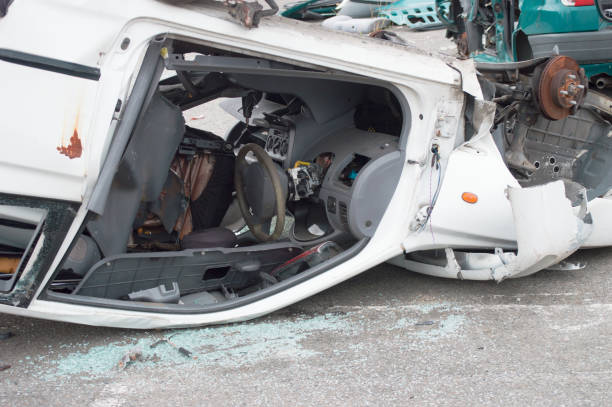
When you are involved in a car accident, your first instinct is to swap insurance details with the other driver. That is smart. But if the other vehicle is a commercial truck, a delivery van with a company logo, or any vehicle used for business purposes, you cannot treat it the same as a regular passenger car. The information you collect needs to go far beyond a name, phone number, and policy number. Missing the right details now can mean fighting a much harder battle later if you need to file a claim.
Commercial vehicles are owned by companies, leased by companies, or operated by drivers who are employees or independent contractors. That creates a web of possible defendants. The driver behind the wheel might not be the person who actually holds the insurance policy. The truck itself might be owned by a separate entity that leases it to a logistics firm. The cargo inside might be owned by yet another company. If you only get the driver’s personal insurance information, you may be leaving out the party with the deepest pockets and the most liability – the company that employs the driver or owns the vehicle.
Start by writing down the official company name displayed on the side of the vehicle. Do not rely on a magnetic sign or a decal that could be fake. Check the door, the rear, and any placards. If the vehicle is a semi-truck, look for the USDOT number. That is a federal identifier required for any commercial vehicle operating across state lines. Write that number down. It is a direct route to finding the company’s safety record and insurance coverage through public databases. If you are in Canada, get the CVOR number or provincial equivalent. If the vehicle is a local delivery van, still get the company name exactly as printed. Even a small plumbing van with a business name is a commercial vehicle.
Next, ask for the driver’s commercial driver’s license. A CDL is different from a regular license. Write down the license number and the state that issued it. Commercial drivers are held to stricter standards. They must carry medical cards and logbooks. If the driver cannot produce a valid CDL, that is a red flag. The company may be operating illegally, and that fact can strengthen your case. Also get the driver’s full name, phone number, and email. But understand that the driver may not be the person with authority to give you the company’s insurance binder. Do not accept an “I don’t have that information” as a final answer. You have a right to the insurance information for the vehicle, not just the driver’s personal policy.
Ask specifically for the name of the insurance company that covers the commercial vehicle. Commercial policies are often written by different insurers than personal auto policies. Get the policy number and the name and phone number of the agent or claims representative. If the driver does not have that, ask for a company office phone number to call directly. Do not leave the scene until you have a way to reach the company’s risk management or fleet department.
You also need to record the vehicle’s license plate number, state, and the VIN – the vehicle identification number. The VIN is usually visible through the windshield on the driver’s side. Write it down. The VIN ties the vehicle to its owner and its insurance history. If the truck is registered to a different company than the one on the door, that discrepancy is critical. It could mean the vehicle is leased or that the driver is using a personal vehicle for business, which creates separate coverage issues.
Take photos. Photograph the entire vehicle – front, back, sides, and especially any company markings, license plates, and damage points. Photograph the driver’s license and insurance card if they will allow it. If they refuse, you have the right to write down the information. Do not get into an argument. Just record what you can see.
Why does all this matter? Because commercial liability insurance is structured differently. The policy limits are often much higher than personal auto policies – sometimes millions of dollars – but the coverage may be split between the company’s policy and a separate cargo or umbrella policy. If you miss the company’s information, you may only be able to file against the driver’s personal policy, which could be wholly inadequate for your injuries. Worse, the company may deny any responsibility if you do not formally notify them within a specific timeframe.
Also, remember that commercial drivers are subject to federal hours-of-service rules. If you suspect fatigue or impairment, ask the driver for their logbook or electronic logging device records at the scene. They are required to show it to law enforcement. If the police are present, ask the officer to note whether the driver was compliant. That can become evidence of negligence later.
Exchange information with all parties means exactly that. Do not assume the driver is the only party. The company, the vehicle owner, the cargo owner, and even the maintenance contractor can all be liable. Collecting the complete set of identifiers at the scene transforms a murky liability question into a clear target. It takes five extra minutes. Skipping it can cost you months of legal headaches.