When you file a legal liability claim, the burden of proof sits squarely on your shoulders. You have to show the other side was at fault, and the easiest way to do that is with photographs that cannot be faked or argued about. The single most important feature of those photos is a clear, unalterable date stamp. Without it, your pictures become little more than a vague memory—useful as a hint, but worthless as solid evidence.
Insurance adjusters and defense lawyers look for any excuse to dismiss your claim. If you hand them a photo of a cracked sidewalk that has no date, they will immediately question when you took it. Maybe it was from last year. Maybe it was from a different location. Maybe you staged it after the accident happened. Without a date, every one of those doubts becomes a legitimate attack on your case. A date stamp shuts those doors. It tells the court or the adjuster that on a specific day, at a specific time, the condition you are complaining about actually existed.
Your smartphone automatically embeds a digital timestamp inside the photo file. That is called metadata, and it is good. But it is not enough. Metadata can be altered by software, and in a courtroom the opposition will often demand proof that the metadata was never tampered with. The safest move is to take your photo in a way that burns the date and time directly onto the image itself. Many camera apps offer an option to overlay a timestamp. If yours does not, download a free app that does. Better yet, hold a current newspaper or a receipt from that day in the frame, right next to the hazard. That gives you a physical date marker that no software trick can erase.
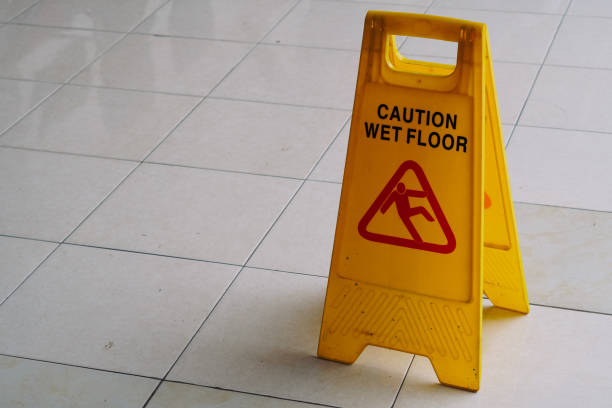
What exactly should you photograph? Start with the big picture. If you slipped on a wet floor in a grocery store, stand back and take a wide shot that shows the entire aisle, the sign or lack of a sign, and the floor condition. Then move in close. Capture the exact puddle, the source of the water, and any debris. Take photos from multiple angles. Squat down and shoot at floor level so the viewer can see the hazard the same way you saw it. If there is a leak from a ceiling, show the ceiling, the drip path, and the puddle on the floor in one continuous sequence of photos. The goal is to make the scene impossible to misrepresent.
Timing matters more than you think. Take photos as soon as possible after the incident. Within minutes if you can. Conditions change fast. A puddle gets mopped up. A broken railing gets fixed. A pothole gets filled. If you wait a day, the other side will argue that whatever you photographed is not what existed at the moment of your accident. Immediate photos create a legal snapshot of the event, freezing the evidence before anyone can alter it.
Do not forget video. A short video clip can capture context that still photos miss. Walk around the area slowly, narrate what you are seeing, and keep the lens steady. Show the hazard from a distance, then walk up to it, then zoom in. Video also helps prove things like lighting conditions, the size of a hazard compared to surrounding objects, and how long you might have had to see it before falling. Again, make sure the video file has a clear timestamp. Record a few seconds of a clock or a weather app on your phone at the beginning of the video to establish time and date.
What about privacy? You do not have to include people’s faces unless those people are involved in the incident. If you are in a public place like a store, a parking lot, or a sidewalk, you generally have the right to photograph what is visible. But avoid taking pictures of security guards, employees, or bystanders in a way that harasses them. Stay calm, explain that you are documenting the scene for an insurance claim, and do not argue if someone tells you to leave. Their refusal to allow photos can actually help your case later—document that refusal with a note or a voice memo.
Finally, store your photos and videos properly. Do not leave them on your phone and forget them. Copy them to a cloud service or an external drive immediately. Keep the original files untouched. Do not crop, filter, or edit anything. The moment you alter a photo, you invite the accusation that you changed the evidence. If you need to circle something or add an arrow, make a copy and mark up the copy. Always preserve the original. Label your files with the date and a short description, such as “2025-03-21 wet floor aisle 3.” That simple organization will save you hours of confusion later.
Date-stamped photos are not a luxury; they are the backbone of a credible liability claim. Take them early, take them thoroughly, and protect them from tampering. If you do that, you give yourself the best chance to prove negligence and get the compensation you deserve.