If you have ever watched a courtroom drama on television, you have likely heard the phrase “guilty beyond a reasonable doubt.” That is the standard used in criminal cases. When a prosecutor tries to put someone in prison, the jury must be almost certain that the defendant committed the crime. A shadow of a doubt is enough to set the person free. This makes sense because the government is trying to take away someone’s freedom. The stakes are that high.
But a liability claim is not a criminal case. It is a civil matter. You are not trying to send someone to jail. You are trying to get paid for a loss you suffered because of someone else’s carelessness or intentional act. The legal system treats civil claims differently, and the most important difference is the burden of proof. In a liability claim, you do not need to prove your case beyond a reasonable doubt. You only need to show that it is more likely than not that the other person was at fault. This is called a preponderance of the evidence.
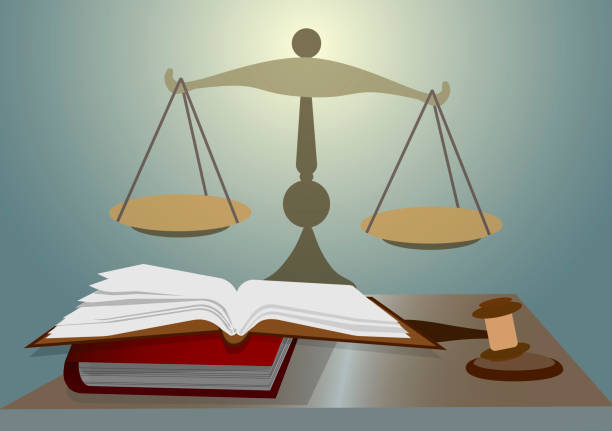
Think of it like a simple scale. On one side of the scale is your evidence. On the other side is the other party’s evidence. If your side is even slightly heavier—if it tips the scale even 51 percent in your favor—you win. That is all that is required. You do not need to convince the court that there is no reasonable doubt. You just need to convince them that your version of events is more probable than the alternative.
This lower burden of proof exists for a practical reason. A liability claim is about money, not liberty. If the court makes a mistake in a criminal case, an innocent person goes to prison. That is a catastrophic error. If the court makes a mistake in a civil case, someone might be ordered to pay money they should not have to pay, or an injured person might not get the compensation they deserve. Both are bad, but neither is as severe as locking up an innocent person. So the law sets a lower threshold for civil cases to make it easier for injured people to recover their losses.
The preponderance standard also affects how you present your case. In a criminal trial, the prosecution must eliminate every reasonable alternative explanation. The defense often tries to create doubt by pointing to missing evidence or alternative theories. In a liability claim, that strategy is less effective. You do not need to rule out every possibility. You just need to show that your explanation is the most likely one. For example, if you slip and fall in a grocery store, you do not need to prove that the store manager definitely knew about the spill and ignored it. You only need to show that the spill had been there long enough that the store should have known about it. If the evidence suggests it was there for an hour, but the store claims it could have been only five minutes, the jury decides which story is more believable. If they think your story is even slightly more believable, you win.
Another key point is that in a criminal case the defendant is presumed innocent until proven guilty. That presumption is very strong. In a civil liability claim, there is no such presumption. The court starts with a neutral position. Neither side is favored. The evidence decides the outcome. This means that a plaintiff can win a liability claim even if the defendant’s behavior was not criminal. For instance, a driver who runs a red light and causes a crash is likely liable for damages. That same driver could also be charged with reckless driving in a criminal court. But many liability claims involve conduct that is not criminal at all. A doctor who makes a mistake during surgery might be sued for medical malpractice, but unless the mistake was intentional or grossly negligent, it is not a crime. The civil standard allows you to hold that doctor accountable for your medical bills and lost wages even if no criminal charges are filed.
The practical takeaway is this: Do not let the high bar of criminal law scare you from pursuing a liability claim. You do not need airtight proof. You do not need to convince a jury beyond every doubt. You only need to tip the scale. That is why many liability claims succeed even when the evidence is not perfect. The system is designed to help you recover when you have been harmed, as long as your story is more convincing than the alternative.
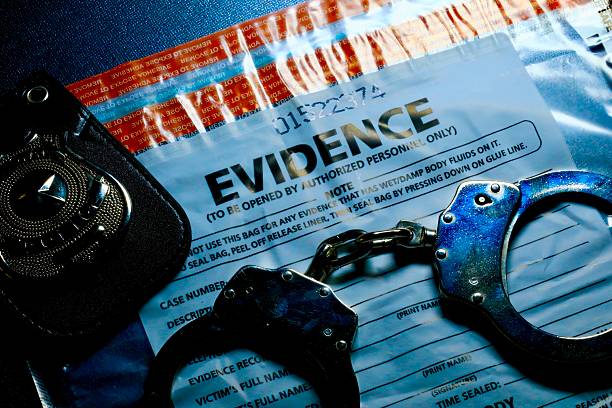
If you have suffered an injury or loss because of someone else’s actions, focus on gathering the evidence that makes your account of events the most likely one. Photographs, witness statements, medical records, and expert opinions all help tip that scale. The other side will try to create doubt, but remember that doubt alone is not enough to stop a civil claim. They have to show that your version is not the most probable one. That is a much harder task for them, and it is why the preponderance standard is your strongest tool.