A hit-and-run driver swerves into your lane. You jerk the wheel to avoid a collision and slam into a large oak tree on the sidewalk. The driver speeds off. Your car is totaled, and you’re staring at a tree that belongs to the city. You have medical bills, a wrecked vehicle, and no idea who hit you. This situation is more common than you might think, and it raises a tough question: who pays for the damage to your car and the city’s tree? The answer depends on a few key facts, and you need to act fast to protect yourself.
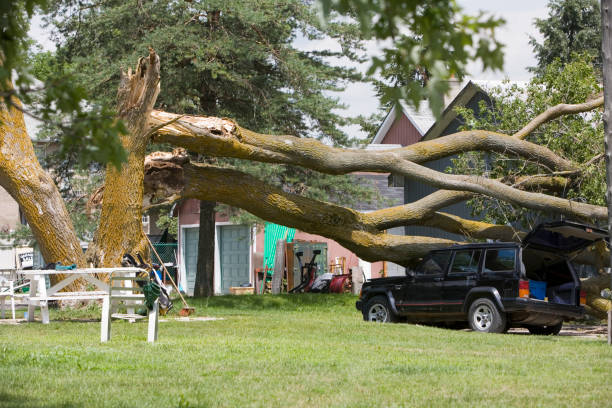
First, understand that the tree itself is usually considered a “fixture” attached to the land. If it’s on public property—like a city parkway, a median, or a street-side planting strip—the city or municipality owns it. That means the city may have some responsibility for keeping it safe, but not for damage caused by a random driver crashing into it. In the eyes of the law, you are the one who drove into the tree, even if you were trying to avoid a hit-and-run. Unless you can prove the tree was already dangerous—rotten, leaning, or blocking visibility—the city is not liable for your accident. Your own actions caused the crash, even if those actions were a split-second decision to avoid a bigger collision.
So where does that leave you? Your first step is the same as any hit-and-run: call the police immediately. Report the hit-and-run driver’s description, license plate if you got it, and the direction they fled. The police report will be crucial for your insurance claim. Next, do not move your car until police arrive and document the scene. Take photos of the tree, the damage to your car, any skid marks, and the road conditions. If there are witnesses, get their contact information. The more evidence you have, the stronger your case will be.
Now, about insurance. If you carry collision coverage on your auto policy, that will pay for repairs to your vehicle minus your deductible. Hit-and-run accidents are usually covered under collision. But if you only have liability insurance—which covers damage you cause to others—you’re out of luck for your own car. Uninsured motorist property damage coverage (UMPD) might also apply if you have it, but it varies by state. Check your policy documents. If the hit-and-run driver is never found, you cannot sue them directly, so your insurance is your main recovery tool.
What about the city’s tree? If you damaged a public fixture, the city may send you a bill for the cost of removal, replacement, or repair. This is not a fine—it’s a claim for property damage. Your liability insurance should cover this, because you are legally responsible for the damage you caused to the city’s property. However, the city might waive the claim if you can prove the tree was poorly maintained or that the hit-and-run driver’s actions were the true cause. This is a long shot, but it’s worth asking. Some municipalities have policies to forgive damage from unavoidable accidents, especially if you have a clean record. Don’t assume you owe money until you get a formal notice.
If you were injured in the crash, your health insurance pays your medical bills first. You may also have personal injury protection (PIP) or medical payments coverage if your policy includes it. Lawsuits against the city are difficult because of “sovereign immunity” laws that protect government entities from many claims. You would need to prove gross negligence—like the city knew the tree was dying and did nothing—to win a case. That’s a high bar.
A practical tip: do not admit fault at the scene. Even if you feel you caused the crash, the hit-and-run driver is the primary responsible party. Tell the police what happened exactly: “A car came into my lane, I swerved to avoid it, and hit the tree.” Do not say “I lost control” or “I’m sorry for hitting the tree.” Let the facts speak.
In summary, after a hit-and-run that sends you into a tree or fixture, your first priority is safety and reporting. Use your own insurance for your vehicle, expect a potential bill from the city for the tree, and understand that the hit-and-run driver’s unknown identity limits your legal options. Keep all records, talk to your insurance adjuster, and consider consulting a local attorney who handles motor vehicle accidents if the city demands significant payment. The system is not designed to cover these crashes easily, but knowing your rights and acting quickly can prevent surprise expenses.