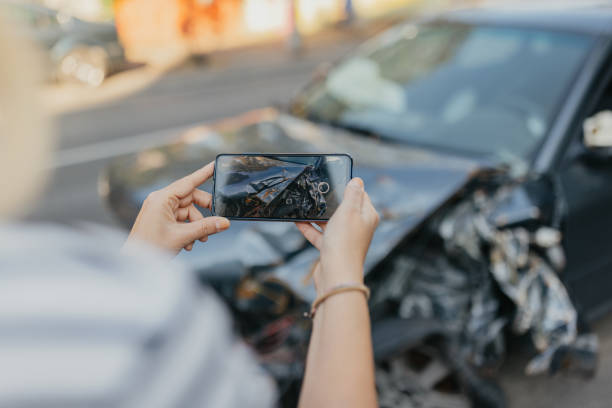

In an age where nearly everyone carries a high-definition camera in their pocket, the landscape of legal evidence has fundamentally transformed. A common and crucial question arises: can photos or videos you did not personally capture still be admitted as evidence in a court of law? The unequivocal answer is yes. Media recorded by others can be powerful and admissible evidence, but its journey from a smartphone to a courtroom exhibit is governed by strict legal rules designed to ensure reliability and fairness. The admissibility hinges not on who pressed the record button, but on overcoming foundational hurdles related to authentication, relevance, and the avoidance of undue prejudice.
The primary gatekeeper for any evidence, including visual media, is the judge, who applies the rules of evidence. The first and most significant challenge for a party seeking to introduce a video or photo they didn’t create is authentication. Under rules like Federal Rule of Evidence 901, the proponent must provide sufficient proof to support a finding that the item is what it claims to be. Essentially, they must demonstrate that the photo or video accurately depicts the scene or event it purports to show and has not been altered or manipulated. For user-generated content, this might involve testimony from the person who recorded it, explaining when, where, and how they did so. Alternatively, metadata—digital information embedded in the file like timestamps, geolocation, and device identifiers—can be instrumental in establishing authenticity. In some cases, witnesses who were present can verify the content. Without proper authentication, even a seemingly damning video may be excluded as untrustworthy.
Once authenticated, the evidence must meet the broader standards of relevance and balance. The visual evidence must have a tendency to make a fact of consequence to the case more or less probable. A bystander’s video of a car accident, for instance, is directly relevant to establishing fault. However, even relevant evidence can be excluded if its probative value is substantially outweighed by the danger of unfair prejudice, confusion, or misleading the jury. A graphic and disturbing video might be deemed overly prejudicial if a less inflammatory description could suffice. The court carefully weighs the evidence’s necessity against its potential to inflame passions.
The source of the evidence further illustrates its viability. Security camera footage from a business, traffic camera recordings from a municipality, or photos from a private citizen’s doorbell camera are all routinely used as evidence, despite being submitted by parties who did not operate the cameras. In these instances, authentication often comes from a custodian of records who can explain the system’s maintenance and the unbroken chain of custody for the data. Social media content is also increasingly prevalent. A post or video from a platform like Facebook or TikTok can be used, provided it is properly authenticated—often a more complex task given the ease of editing and sharing—and deemed relevant. The key is the content’s connection to the case, not the identity of the uploader.
It is important to note that while such evidence can be admitted, its weight—meaning how much credence the judge or jury gives it—is a separate matter. The opposing party can challenge the evidence’s credibility, pointing out potential issues like poor lighting, partial obscuring of the view, possible editing, or the lack of context. They can cross-examine the person who authenticated it or present expert testimony to suggest manipulation. The fact-finder then decides how persuasive the visual evidence truly is.
Ultimately, the law recognizes that critical evidence often exists outside the direct control of the parties involved in litigation. The legal system’s mechanisms for authentication and relevance are adaptable enough to incorporate this reality while safeguarding against fraud and unreliability. Therefore, a photo or video you did not take can absolutely become a pivotal piece of evidence, capable of corroborating a timeline, exposing a lie, or revealing the truth of an event. Its power in court is not derived from ownership, but from its verified ability to accurately and fairly illuminate the facts at the heart of a dispute.