
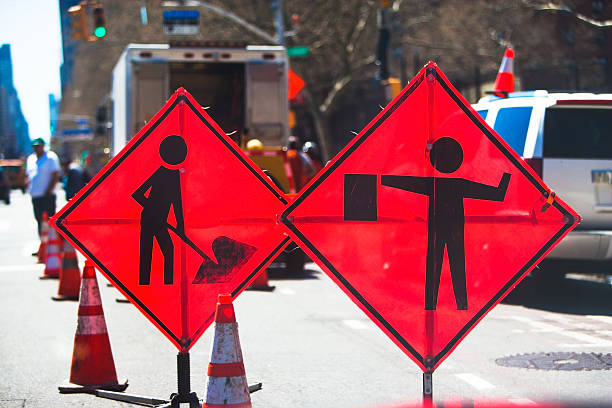
You are a contractor working on a roadside job—maybe replacing a guardrail, painting a crosswalk, or repairing a utility box. A driver swerves, clips you, and speeds off. You are injured. The driver is gone. You have no name, no plates, no insurance info. Now what do you do?
The first rule applies to any hit-and-run: get medical help immediately. Even if the injury feels minor, adrenaline masks damage. Internal bleeding, concussions, and spinal injuries can show up hours later. A doctor’s report also creates a paper trail that your lawyers and insurance companies will use later. Do not delay treatment to search for the driver. Let police handle that.
While you are at the hospital or at home recovering, the legal claim process splits into two separate tracks: what you can get from your own insurance and what you can get from the property owner or general contractor who hired you. These two tracks do not overlap completely, and you need to pursue both.
Your personal auto insurance policy likely includes something called uninsured motorist coverage (UM) or underinsured motorist coverage (UIM). In many states, this coverage applies even if you are not driving your car. If you are a pedestrian or, in your case, a stationary worker on the roadside when a hit-and-run driver hits you, your own UM policy can pay for your medical bills, lost wages, and pain and suffering up to your policy limit. The key is that you must have purchased UM coverage. Some drivers waive it to save money, and that is a mistake. If you waived UM, you have no coverage for a hit-and-run. Check your policy now. Even if you don’t have it, the vehicle you were using on the job—your work truck—may have UM coverage under a commercial policy. Talk to your insurance agent immediately.
The second track involves workers’ compensation insurance. If you are an employee of a contracting company, your employer’s workers’ comp should cover your medical bills and a portion of your lost wages, regardless of who hit you. Workers’ comp is no-fault, meaning you do not need to prove the driver was at fault. But workers’ comp has a trade-off: you generally cannot sue your employer for pain and suffering. You can still sue the hit-and-run driver if you find them, but without a driver that lawsuit is dead. That makes UM coverage critical for your pain and suffering claim.
If you are an independent contractor—meaning you own your own business and hire yourself out—workers’ comp may not cover you unless you purchased your own policy. Many independent contractors skip it. In that case, your only financial recovery will come from your own UM policy, any disability insurance you bought, and possibly from the property owner or general contractor who controlled the job site. General contractors and property owners have a legal duty to keep the work zone safe. If they failed to set up proper barriers, cones, warning signs, or flaggers to protect you from traffic, they may be partially at fault. You can file a third-party liability claim against them. This is not a workers’ comp claim; it’s a personal injury lawsuit. You can recover medical costs, lost income, and pain and suffering.
To succeed against the property owner or general contractor, you must prove that they knew or should have known that the roadside was dangerous and that they did nothing reasonable to protect you. For example, if the job site had no advance warning signs for two miles and the driver had no chance to slow down, the contractor in charge may be liable. Likewise, if they directed you to work in a lane with active traffic without a lane closure plan, they could be negligent.
Document everything. Photograph the scene, the road layout, any missing signage, and your injuries. Get witness contact info from other workers or passing motorists who stopped. Do not post on social media about the accident or your injuries—defense lawyers will use your posts to argue that you are not really hurt.
You have limited time. Every state has a statute of limitations for personal injury claims, usually one to three years from the accident date. For hit-and-run cases, the clock starts ticking the day of the hit. If you never find the driver, you cannot sue them, but your UM claim and any third-party claim against the job site owner still must be filed within that deadline. Missing it means you get nothing.
Finally, hire a lawyer who handles construction injury and auto accident cases. This is not a simple slip-and-fall. The intersection of hit-and-run law, contractor status, workers’ comp, and third-party negligence requires someone who can navigate multiple insurance policies and legal theories. A good lawyer will know how to force the insurance companies to pay what they owe, and how to investigate whether the general contractor or property owner dropped the ball on safety.
Do not wait. Report the hit-and-run to the police, get the case number, notify your insurance, tell your employer or the general contractor in writing, and get legal help. The driver may never be caught, but you still have a path to compensation if you act fast and smart.