
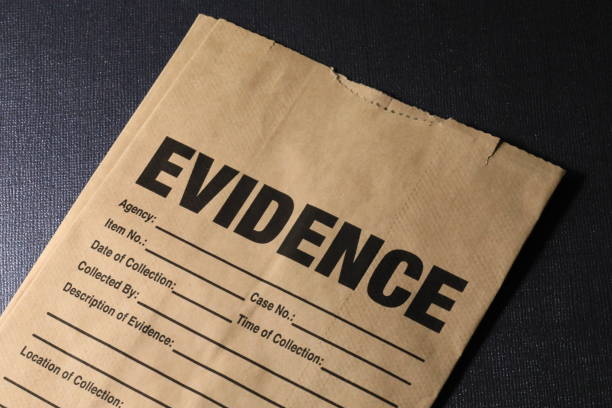
If you have ever watched a courtroom drama on television, you have probably heard the phrase “beyond a reasonable doubt.” That is the standard the prosecution must meet in a criminal case. In a civil liability claim, the standard is completely different. This difference is one of the most important things to understand about how legal liability works, and it explains why someone who is not convicted of a crime can still be forced to pay damages in a liability case.
In a criminal case, the government has to prove that the defendant is guilty beyond any reasonable doubt. That means every juror must be virtually certain that the person committed the crime. If there is any plausible alternative explanation that could create doubt in the mind of a reasonable person, the jury must find the defendant not guilty. This is a very high bar. It is intentionally hard to convict someone of a crime because the consequences can include prison time, fines, or even loss of freedom. Society has decided that it is far better to let a guilty person walk free than to lock up an innocent one.
A liability claim, on the other hand, is not about punishing someone. It is about shifting the financial cost of an injury or loss from the victim to the person who caused it. Because the stakes are money, not freedom, the standard of proof is much lower. In most civil liability cases, the plaintiff—the person bringing the claim—only has to prove that the defendant is more likely than not responsible. This is called the preponderance of the evidence standard. Think of it as a simple seesaw. If the evidence tips just slightly in favor of the plaintiff, they win. Even if the evidence is fifty-one percent for the plaintiff and forty-nine percent against, the plaintiff gets the judgment. That is all it takes.
This lower standard has huge practical consequences. Consider a scenario where a driver runs a red light and hits a pedestrian. The driver is charged with reckless driving, a criminal offense. At the criminal trial, a witness testifies that she thinks the light was yellow, not red. Another witness says the driver seemed distracted. The driver’s lawyer points out that the traffic camera was not working that day. The jury has some doubt. They might think the driver probably ran the red light, but they are not one hundred percent sure. Under the criminal standard, they must acquit. The driver walks free.
Now the pedestrian files a liability claim against the driver for medical bills and lost wages. The same evidence is presented. But this time, the jury only needs to believe that it is more likely than not that the driver ran the red light. That doubt that saved the driver in criminal court no longer matters. The jury can say, “We think there is a fifty-five percent chance the driver was at fault.” That is enough. The driver loses and has to pay damages. The same facts, two different outcomes, based solely on the burden of proof.
This is not a loophole. It is by design. Liability law is built on the principle that when someone is hurt and someone else probably caused the harm, the injured person should not have to bear the cost alone. Society spreads the risk. If we required the same high standard of proof in liability cases as in criminal cases, many injured people would never get compensation. The person who caused the harm would keep their money, and the victim would be stuck with the bills. That would be unfair, and it would remove the incentive for people to act carefully.
There is another aspect to this difference. In a criminal case, the defendant has many constitutional protections that do not apply in civil liability. The right to a lawyer, the right to remain silent, the right to a jury trial—all are guaranteed in criminal court. In a liability claim, those protections are weaker or absent. For example, in a civil case, you can be forced to testify and answer questions. Your silence can be used against you. The judge, not a jury, may decide some cases. And the standard of evidence is lower.
So when you hear that someone was found not guilty in a criminal trial but still had to pay in a civil lawsuit, do not be confused. It is not a contradiction. It is how the system works. The criminal case asks: Is this person guilty beyond a reasonable doubt? The liability case asks: Is this person more likely than not responsible? Those are two different questions, and they get two different answers. Understanding this distinction is critical for anyone involved in a liability claim. Do not assume that because you avoided jail time, you also avoided paying damages. The burden of proof in civil court is designed to favor the injured party, and it does.