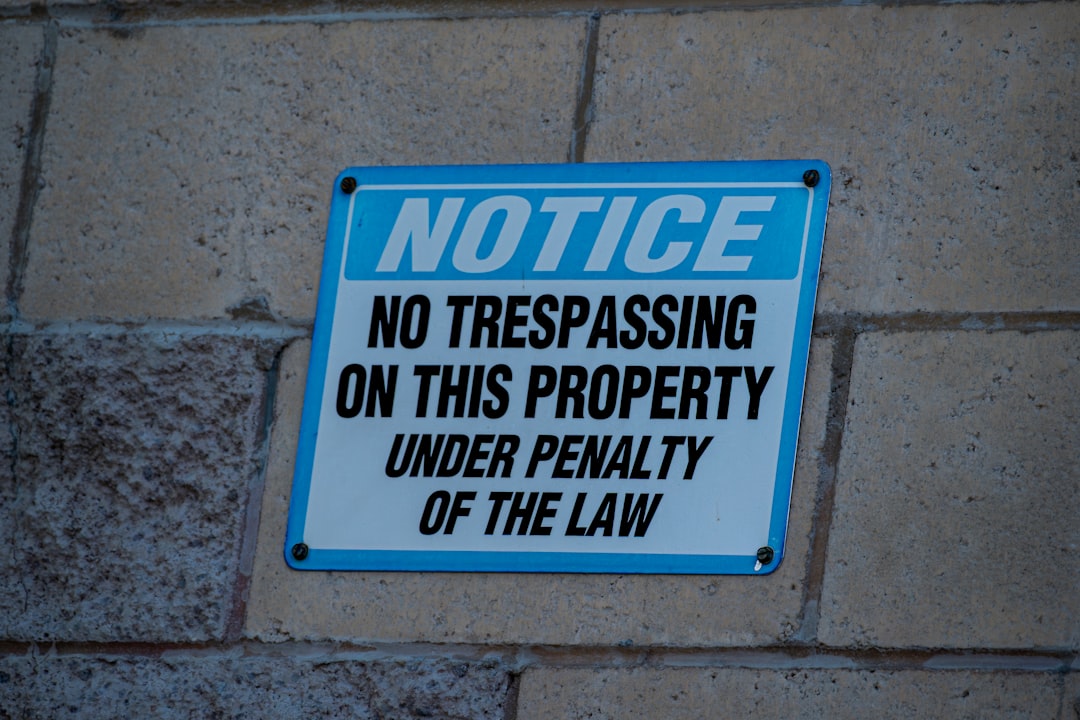

When an individual is injured on another’s property, the pathway to compensation is not automatic. The visitor must navigate a specific legal framework, proving several key elements to establish a valid claim, typically rooted in the law of premises liability. This area of law balances the property owner’s responsibility to maintain a safe environment with the visitor’s own duty of reasonable care. Success hinges on the injured party’s ability to construct a compelling narrative of negligence, supported by evidence.
Fundamentally, the first thing a visitor must prove is their legal status on the property at the time of the incident. The law categorizes visitors into three groups: invitees, licensees, and trespassers, each owed a different standard of care. An invitee is someone who enters the property for a mutual business or commercial benefit, such as a customer in a store. A licensee is a social guest, present for non-business purposes. Trespassers are those without any permission. The highest duty is owed to invitees, requiring property owners to actively inspect for and remedy dangerous conditions. For licensees, the duty is to warn of known hazards. Trespassers are generally owed only the duty to avoid intentional or willful harm. Therefore, establishing oneself as an invitee or, in many jurisdictions, a licensee, provides the strongest foundation for a claim, as the legal expectations of the property owner are more stringent.
With status established, the core of the claim revolves around proving negligence. This requires demonstrating four interconnected elements. First, the visitor must show that the property owner or occupier owed them a duty of care, which flows directly from their visitor status as previously defined. Second, they must prove a breach of that duty. This means showing that the owner failed to meet the required standard—for example, by neglecting to fix a broken staircase railing they knew about, failing to conduct reasonable inspections that would have revealed a hidden spill, or not providing adequate lighting in a dangerous area. The breach is the failure to act as a reasonably prudent property owner would under similar circumstances.
Third, and critically, the visitor must prove causation. It is not enough to show a dangerous condition and a duty; the visitor must connect them. This involves proving both actual cause and proximate cause. Actual cause, often called “but-for” cause, means that but for the property owner’s breach of duty, the injury would not have occurred. Proximate cause asks whether the injury was a foreseeable consequence of the owner’s negligence. For instance, if a visitor slips on an unmarked wet floor and breaks a wrist, the causation is clear. However, if that same visitor, after slipping, is then struck by a car in the parking lot, the chain of causation may be broken, making the second injury less foreseeable.
Finally, the visitor must prove actual damages. The law does not provide compensation for near-misses or fear alone. There must be a demonstrable harm, such as medical bills, lost wages, pain and suffering, or property damage. Documentation is essential here; medical records, repair estimates, and pay stubs become the tangible proof of loss. Without quantifiable damages, even the most clear-cut case of negligence will not result in a monetary award.
In conclusion, a visitor seeking redress for an injury on another’s property carries the burden of proof. They must meticulously establish their legal status to define the duty owed, demonstrate through evidence how the property owner breached that duty, and causally link that breach directly to their tangible injuries. It is a structured legal argument that moves from classification to negligence to consequence. While the principles are consistent, the application is intensely fact-specific, turning on the details of the property, the actions of both parties, and the nature of the hazard. Ultimately, a valid claim is built not on the mere fact of an accident, but on a proven failure of the property owner to fulfill their legal obligation to provide a reasonably safe environment for those they welcome onto their land.