
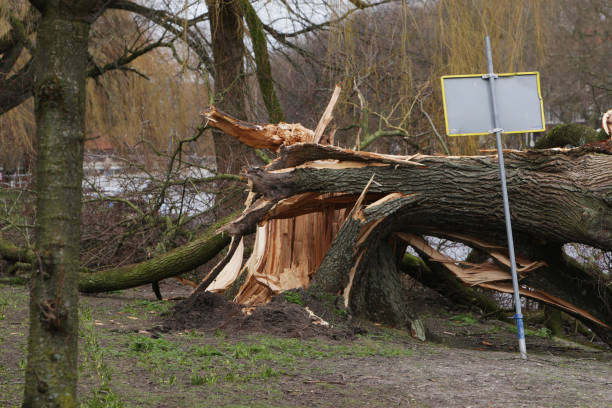
A driver sideswipes your parked car and speeds off. You are already angry and frustrated. Then you walk up to your vehicle and see that a large tree branch—or even the whole tree—has crushed the roof, broken the windshield, and left the car undrivable. The tree came from your neighbor’s yard. The driver who hit you is gone. Now you have two separate problems, and neither one is simple. But if you understand how liability works for damage from trees and other fixtures on someone else’s land, you can figure out who pays and what you need to do next.
First, understand that a hit-and-run driver and a fallen tree are two different claims. The hit‑and‑run part is handled by your own insurance policy’s uninsured motorist property damage coverage or collision coverage, depending on your state and policy. That part covers the damage caused by the other car. But the tree damage is a separate event. If the tree fell because of a storm, an act of nature, or decay that your neighbor did not know about, you probably cannot force your neighbor to pay. Insurance and the law treat falling trees as “acts of God” unless the neighbor was negligent.
Negligence is the key word. To hold your neighbor responsible for the tree that crushed your car, you must prove three things. First, the neighbor knew—or should have known—that the tree was dangerous. Second, they did nothing to fix it. Third, that failure directly caused the damage. This is not a high bar, but it is also not automatic. If the tree looked healthy, had no cracks, no leaning, no rot visible to the naked eye, and no prior complaints, the neighbor is usually off the hook. Even if the tree fell on a calm, sunny day, you still need to show they had reason to know it was a hazard.
What counts as a “fixture” in this context? Fixtures are things attached to the land, like a fence, a retaining wall, a heavy garden statue, a detached garage, or a large satellite dish. If one of those falls or collapses and damages your car after a hit‑and‑run, the same negligence rules apply. A fence that was rotting for years and finally blew over in a light wind is different from a fence that was built last week but got hit by a tornado. The neighbor is not responsible for extreme weather events unless they made the problem worse by, say, ignoring a building code or a prior warning from the city.
Now, what about the hit‑and‑run driver? In a hit‑and‑run, the driver who fled is liable for the damage they caused. But if they are never caught, your own coverage steps in. Most states require uninsured motorist property damage coverage, which pays for damage caused by an unknown driver. That coverage usually has a deductible, and it only covers the part of the damage related to the crash. If the tree fell on the car after the hit‑and‑run, the hit‑and‑run insurer will argue the tree damage is a separate occurrence. You might end up with two deductibles: one for the hit‑and‑run and one for the comprehensive claim for the tree.
Comprehensive coverage is what you need for tree damage. Comprehensive covers falling objects, including trees, regardless of who owns the tree. If you have comprehensive insurance, you file a claim with your own company, pay your deductible, and get the car repaired. Your insurer then may or may not try to recover the money from your neighbor if they find negligence. But you do not have to wait for that. You file the claim, get your car fixed, and move on. The downside is your premium may go up, and you pay the deductible.
If you do not have comprehensive coverage, you are in a tougher spot. You cannot force your neighbor to pay unless you can prove negligence. And proving negligence requires evidence. Take photos of the tree’s base, the break, any rot, any cracks, and any signs the tree was sick. Check if your neighbor had previously been warned by an arborist, a city inspector, or by you in writing. If you sent an email or a letter saying “that tree looks dangerous,” keep a copy. If the neighbor ignored that warning, you have a strong case. If not, you likely have no case, and you will have to pay for the tree damage out of pocket.
One more twist: what if the tree fell on the car while the hit‑and‑run driver was still at the scene? For example, the driver hits the car, pushes it into the tree, and the tree falls on top. In that situation, the tree damage is part of the crash. The hit‑and‑run driver’s negligence caused the tree to fall, even though the tree was on your neighbor’s property. The neighbor is not liable. The hit‑and‑run driver is, and if they cannot be found, your uninsured motorist property damage coverage should cover the entire damage—including the tree impact. You still pay one deductible, and your insurance handles it.
The bottom line is direct. Do not assume your neighbor is automatically responsible. Do not assume your insurance will cover everything without a deductible. Act quickly. Document the scene, report the hit‑and‑run to the police, and file a claim with your own insurer. Let them investigate whether the tree damage is part of the crash or a separate event. If the tree was clearly rotten and your neighbor knew, then hire a lawyer to pursue a negligence claim. Otherwise, use your comprehensive coverage and treat the tree damage as a weather‑related loss. And if you do not have comprehensive coverage, consider buying it before the next storm. That is the only way to protect yourself when a tree—or a hit‑and‑run driver—decides to ruin your day.