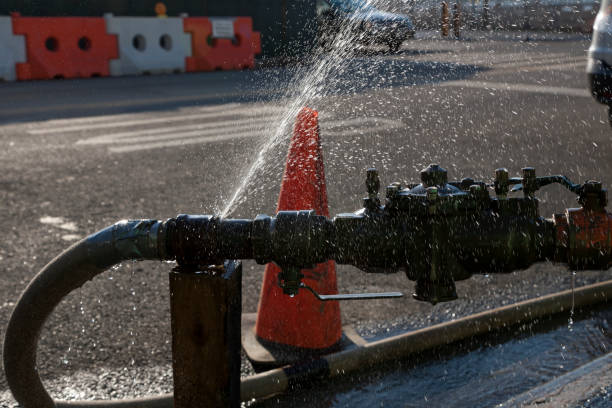
If you have been involved in an incident that could lead to a legal liability claim, you have a very short window to capture the most important pieces of evidence. Transient evidence is anything that will change, disappear, degrade, or be cleaned up within minutes or hours. That includes water on a floor, skid marks on pavement, temporary signage, weather conditions, lighting, the positions of movable objects, and the physical state of anyone involved. Waiting even an hour can turn a winning case into a losing one. Your phone camera is your best tool, but only if you use it correctly and fast.
The first thing to understand is that the scene of an incident is never static. In a slip-and-fall, the wet spot dries. In a car accident, vehicles get moved, debris gets swept aside, and witnesses drive away. In a product defect case, the broken part can be tampered with or lost. In a premises liability claim, maintenance crews will clean the mess, fix the broken step, or remove the loose railing as soon as word gets out. You cannot rely on anyone to preserve the scene for you. That is your job, and you have to do it before anything changes.
Start by taking panoramic shots of the entire scene from multiple angles. Do not zoom in first. Get the big picture so that later you can show exactly where things were in relation to each other. For example, in a parking lot accident, you need to show the curb, the lighting pole, the pothole, and the nearest entrance all in one frame. If you just take close-ups of the pothole, a defense lawyer can argue that it could have been avoided or that it was not in a conspicuous location. The big picture defeats that argument.
Next, move in for detailed shots of the specific hazard or cause of the incident. If you slipped on a wet floor, photograph the puddle from directly above, from the side, and from the direction you were walking. Include a common object for scale, such as a coin, a shoe, or a smartphone. This gives a jury or an adjuster a sense of the actual size and depth of the hazard. If there is a warning sign, photograph it in place, but also photograph the area around it to show whether the sign was visible from the approach direction. Many safety signs are placed after the incident occurs, so capturing them in position immediately is critical.
Do not skip the environmental conditions. Photograph the ceiling if the source of the water is above. Photograph the nearest drain if water is pooling. Photograph the overhead lighting and any burnouts or dim fixtures. Photograph windows and skylights to show whether glare could have contributed. If it is raining or snowing, step outside and capture the weather. If it is dark, do not use flash alone. Use the night mode on your phone to show actual visibility. All of these details become transient as the day changes, the sun moves, or the weather shifts.
Weather is especially tricky because it can change in minutes. If the incident happened on a rainy day but the rain stops before you can take photos, the dry surface will look like an ordinary day. You need to capture the rain on the ground, the puddles, the wet leaves, the water dripping from signs. If you are injured and cannot do this yourself, ask a bystander to take the photos while you instruct them. Do not wait for emergency responders to finish. They have their own priorities, and evidence preservation is not always one of them.
Another category of transient evidence is the condition of the people and property immediately after the incident. If you have visible injuries, bruising, swelling, cuts, or torn clothing, photograph them right away. Bruises fade over hours. Swelling goes down. Torn clothing gets changed. Even if you feel fine, take a photo of your pants, shoes, and hands. The way you look immediately after the fall can show the force of the impact, which becomes relevant for proving injury severity.
Document also the positions of any movable objects that could have contributed. Chairs, mats, display racks, ladders, tools, cleaning equipment, and warning cones are all moved within minutes. A store employee might return a ladder to its storage closet after a customer falls. That ladder was the hazard. If you do not photograph it in place, it becomes invisible to the claim.
Finally, do not delete any photos. Even if a photo looks blurry or irrelevant, keep it. The metadata on each image contains the date, time, and often the GPS location. That metadata is a form of evidence that can anchor your timeline. If you delete a photo, you also delete that record. If you are uncertain whether a shot matters, take it anyway. The cost of taking one extra photo is zero. The cost of missing one critical shot can be entire denial of your claim.
The bottom line is straightforward. Transient evidence disappears fast. Your photos are the only permanent record of what the scene actually looked like at the moment of the incident. If you wait, you lose. Take photos immediately, systematically, and with scale and context. Then protect those images by backing them up to the cloud immediately. Do not rely on memory. Do not rely on others. Do it yourself, and do it now.