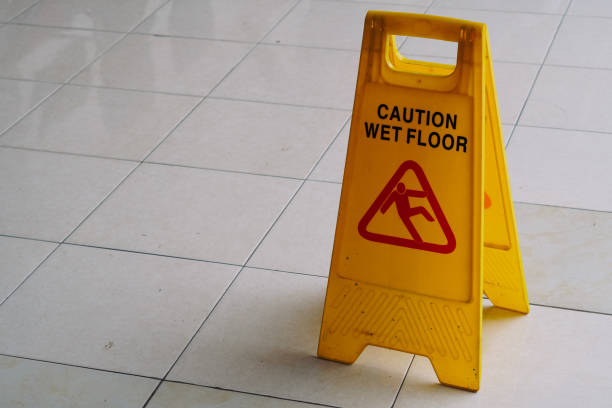
A customer walks into a retail store and slips on a wet floor near the entrance. Within seconds, a routine shopping trip turns into a potential legal headache for the business owner. Slip and fall accidents are among the most common liability claims against general businesses, especially retail stores and service providers. Understanding when the business is legally responsible for a customer’s injuries is not just about avoiding lawsuits—it is about managing risk and protecting the bottom line.
The legal foundation for these claims falls under premises liability. In plain terms, anyone who owns or controls a property has a duty to keep it reasonably safe for people who are legally allowed to be there. For a retail store, that duty applies to customers, delivery drivers, repair workers, and even invited guests. The key word is “reasonably.” The law does not require a business to guarantee that no one will ever get hurt. It does require the business to act as a reasonably careful person would under the same circumstances. That means fixing hazards, warning about dangers that cannot be fixed immediately, and inspecting the premises on a regular schedule.
To win a slip and fall claim, the injured customer must prove four basic things. First, the business owed a duty of care. That is almost always present when a customer is shopping. Second, the business breached that duty. Breach happens when the business knew or should have known about a dangerous condition and did nothing about it. Third, that breach directly caused the customer’s injury. Fourth, the customer suffered actual damages—medical bills, lost wages, or pain and suffering.
The most common battleground in these cases is the second element: Did the business know about the hazard? There are two ways to prove knowledge. Actual knowledge means an employee saw the spill and did nothing. Constructive knowledge means the hazard existed long enough that the business should have discovered it through reasonable inspection. For example, a puddle from a leaky refrigerator that has been there for thirty minutes is likely to be considered a condition the business should have caught. A drop of water that fell from a raincoat just seconds before the customer stepped on it is nearly impossible to defend against, but the business may still lose if employees failed to put down wet floor signs or were not paying attention.
Business owners often assume that putting up a yellow warning sign is enough to escape liability. It is not. A warning sign is one factor, but if the hazard is obvious and the business took no other steps, the sign may not protect them. In fact, some courts have ruled that a floor so wet that it creates a dangerous condition is not cured by a sign alone. The business must take active steps to dry the area, block it off, or redirect customers. Simply posting a sign and walking away can still be considered negligence.
Defenses are available to the business. The most powerful is the “open and obvious” defense. If the dangerous condition was clearly visible to a reasonable person, the business may argue that the customer should have seen it and avoided it. This defense works best when the hazard is something like a large puddle in the middle of a clean, well-lit aisle. It works less well when the hazard is hidden—a transparent liquid on a shiny floor, or a loose rug that looks secure. Another common defense is comparative negligence, meaning the customer was partly at fault. If the customer was texting while walking and did not see a clearly marked wet spot, the court may reduce the business’s liability proportionally.
For businesses, prevention is far cheaper than litigation. A few practical steps cut the risk dramatically. First, establish a written inspection routine. Assign specific employees to walk the sales floor every thirty minutes or more often during busy periods. Document those inspections with a simple log. Second, train every employee to treat spills as emergencies. Even a small puddle from a dropped soda should be cleaned immediately. If a spill cannot be cleaned right away, a worker must stand by the area until it is dealt with. Third, use slip-resistant flooring in high-risk zones like entrances, restrooms, and food service areas. Fourth, install mats at all exterior doors and change them regularly. Fifth, maintain proper lighting throughout the store so that customers can see hazards.
Retail stores and service businesses must also consider other liability claims beyond slip and falls. Property damage can occur when a display shelf tips over and breaks a customer’s phone. Defamation claims arise when an employee falsely accuses a customer of shoplifting in front of other people. The same basic principles apply. The business must act reasonably, respond quickly to hazards, and train employees on proper behavior.
The bottom line is straightforward. Liability claims are not rare events. They happen every day in stores, restaurants, and service shops across the country. Business owners who treat safety as an afterthought will eventually face a lawsuit. Those who take the duty of care seriously and document their efforts will have a strong defense when an accident occurs. Knowing the rules does not eliminate risk, but it puts the business in a position to control the outcome.