A wet floor seems like a minor inconvenience. Someone mops a grocery aisle, a customer drips rainwater near an entrance, or a pool deck stays slick after a sunny afternoon. You take a step, your foot shoots out from under you, and you hit the ground hard. In that split second, your life changes. A seemingly trivial puddle can lead to broken bones, torn ligaments, traumatic brain injuries, or permanent spinal damage. And when that happens, the question becomes not whether you were injured, but who is responsible for the hazard that caused it.
Premises liability law holds property owners and occupiers responsible for keeping their spaces reasonably safe for visitors. This includes stores, apartment buildings, private homes, swimming pools, parking lots, and any common area where people have a legal right to be. The core principle is straightforward: if you invite someone onto your property for business or as a social guest, or if they are legally allowed to be there for another reason, you must take reasonable steps to protect them from hidden dangers you know about or should have known about. A wet floor is one of the most common triggers for these claims, partly because it is so easy to create and so easy to overlook.
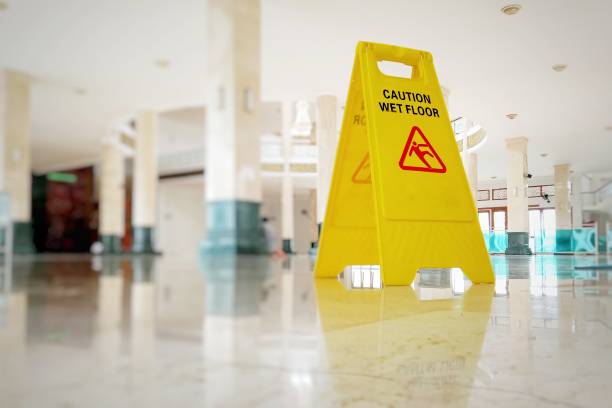
To succeed in a premises liability claim based on a wet floor, you must prove three things. First, the property owner either created the wet condition or knew it existed and did nothing about it. Second, the owner failed to take reasonable action to warn you or fix the problem. Third, that failure directly caused your injury. Notice is the critical piece. If a store employee just mopped a section and hung a yellow warning cone, the owner may have done enough to protect you. But if the cone was knocked over and no one replaced it, or if the mopping left a stretch of floor slippery with cleaning solution that was not given enough time to dry, the owner may still be liable. More often, the injury happens because the wet spot came from a leaky refrigerator, a broken pipe, a draining ice machine, or rainwater tracked in from a storm. In those cases, the owner must show that they inspected the area often enough to catch the hazard and that they cleaned it up or barricaded it promptly. If they cannot prove that, you have a strong claim.
The severity of injury plays a huge role in the value of a wet floor case. A bad bruise might not justify a lawsuit because medical bills are low, but a fractured hip or a concussion that leads to ongoing headaches and memory problems will. Insurance adjusters and juries look at medical records, lost wages, and the long-term impact on your ability to work and enjoy life. They also look at whether the owner had any prior complaints about the same area being wet repeatedly. If a store had five slip incidents in the same aisle last year and did nothing to fix the drainage problem, that pattern can elevate a simple negligence case into a claim for punitive damages meant to punish reckless behavior.
Defenses exist, and they are often aggressive. The property owner may argue that the wet spot was open and obvious, meaning you should have seen it and avoided it. If the floor had a visible sheen or puddle and you were looking at your phone or walking too fast, the owner might claim you were partially at fault. In some states, this comparative negligence can reduce your compensation by the percentage of blame assigned to you. Another defense is that the wet floor was temporary and no reasonable inspection schedule could have caught it before you fell. For example, a customer might have dropped a drink just seconds before you stepped in it. In that scenario, the owner had no realistic chance to clean it up, so they are not liable.
But do not assume that every wet floor case is a lost cause. Successful claims require swift action. Photographs of the wet area taken immediately after the fall, witness contact information, and a detailed incident report from the store manager are crucial. Do not let anyone convince you to sign a waiver or accept a quick cash settlement before you have seen a doctor. Many injuries, especially to the back and brain, do not show up until hours or days later. Once you sign a release, you cannot come back for more compensation even if you later discover a herniated disk or a concussion.
Insurance companies handling premises liability claims have teams of adjusters trained to minimize payouts. They will look for any excuse to deny fault, including your footwear, your pace, and your medical history. That is why you need clear evidence and, in serious cases, a lawyer who understands local premises liability law. The law does not expect property owners to be perfect. It expects them to be reasonable. When they fail that simple standard, and someone falls hard on a slick floor, the legal system exists to make the injured party whole again.
Wet floors are everywhere, but they are not accidents. They are failures of attention and maintenance. If you are the one who pays the price for that failure, you deserve more than a mop bucket and a shrug.